


The use of nuclear power in shipping could save fuel costs and reduce emissions, according to a study by Lloyd’s Register. However, questions about environmental impacts remain.
In addition to alternative fuels such as ammonia and methanol, nuclear power is attracting increasing attention in the shipping industry. The technology promises low emissions and fuel costs combined with high performance, but concerns remain about its environmental footprint.
Only recently, the South Korean company HD KSOE received approval from classification society DNV Maritime to build a 15,000 TEU container vessel with a maximum speed of 24 knots, powered by so-called Small Modular Reactors (SMRs). In addition to DNV, the American classification society ABS has also examined the technology.
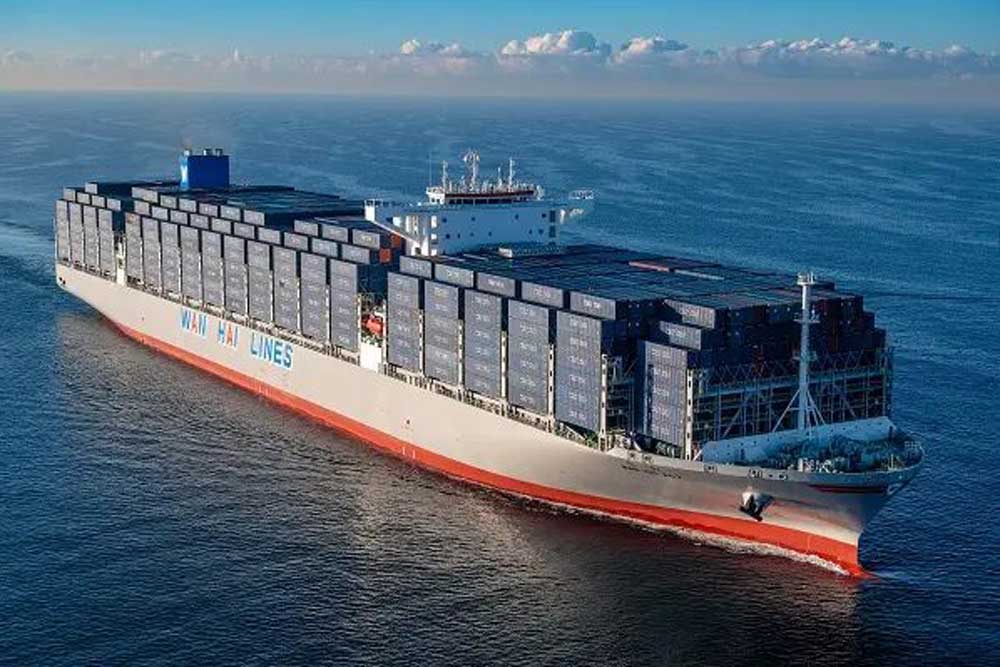
The British Lloyd’s Register (LR) has now also turned its attention to nuclear-powered container ships. According to a new study, such vessels could not only reduce greenhouse gas emissions significantly, but also save almost 70 million dollars per year. At the same time, they could enable faster transit times “while maintaining safety and competitiveness,” according to the class society.
LR conducted the study for Seaspan together with Lucid Catalyst, a climate-focused consultancy. The report examines the technical, economic and regulatory potential of integrating SMRs into the container ship fleet. Lucid Catalyst carried out a comprehensive cost-benefit analysis for Seaspan’s business model and jointly developed requirements that would create significant added value if met.
According to LR, nuclear-powered ships would “eliminate” the largest cost factor in shipping: up to 50 million dollars per year in fuel costs, plus an additional 18 million dollars in penalty payments, for example under FuelEU Maritime.
Faster, more economical and more efficient?
“According to the analysis, a single nuclear-powered 15,000 TEU container ship travelling at 25 knots (39 percent faster than conventional ships) could achieve up to 38 percent higher annual cargo capacity compared to conventionally powered ships,” the study states. “This is made possible by the combination of higher speed (6.3 instead of 5 round trips per year) and 5 percent additional container capacity due to the elimination of fuel tanks and systems.”
To achieve this, however, a stringent supply-chain strategy is needed, supported by a cross-industry consortium. “If the industry commits to purchasing more than 1,000 units within 10–15 years, it is estimated that modular reactors could be produced for 750–1,000 dollars per kilowatt – significantly cheaper than conventional nuclear plants – and maintained within the usual docking cycles of ships,” LR noted. “Each unit would be designed to operate for about five years between fuel changes. This would drastically reduce downtime and ensure independence from global bunkering networks.”
Within four years of the start of such a program, industrially manufactured nuclear propulsion systems could reach market maturity. Total costs would be below 4,000 dollars per kW, and fuel costs below 50 dollars per MWh. Market models suggest a potential market of 40–90 GW by 2050, depending on regulatory progress and industry acceptance.
“The energy transition and the long-term sustainability challenges facing shipping require scalable, long-term solutions,” said Meg Dowling, Lead Engineer for Nuclear Technology and Alternative Fuels at Lloyd’s Register. “Nuclear propulsion offers not only a decarbonized solution, but also a transformative economic opportunity for shipowners and charterers alike. The results of this research provide a solid foundation for defining how systems can be integrated into the merchant fleet, paving a credible path to safe, economically viable and emission-free shipping.”
The use of nuclear power in shipping is not entirely new. The Kiel-built freighter Otto Hahn set sail with a nuclear propulsion system in the 1960s and was decommissioned at the end of the 1970s. After that, no German shipping company was prepared to commission nuclear-powered freighters.
The USA, Japan and Russia have also used the technology in civilian shipping – Russian icebreakers are still nuclear-powered today. Several US Navy vessels, including the aircraft carrier Gerald R. Ford, are equipped with nuclear propulsion systems.