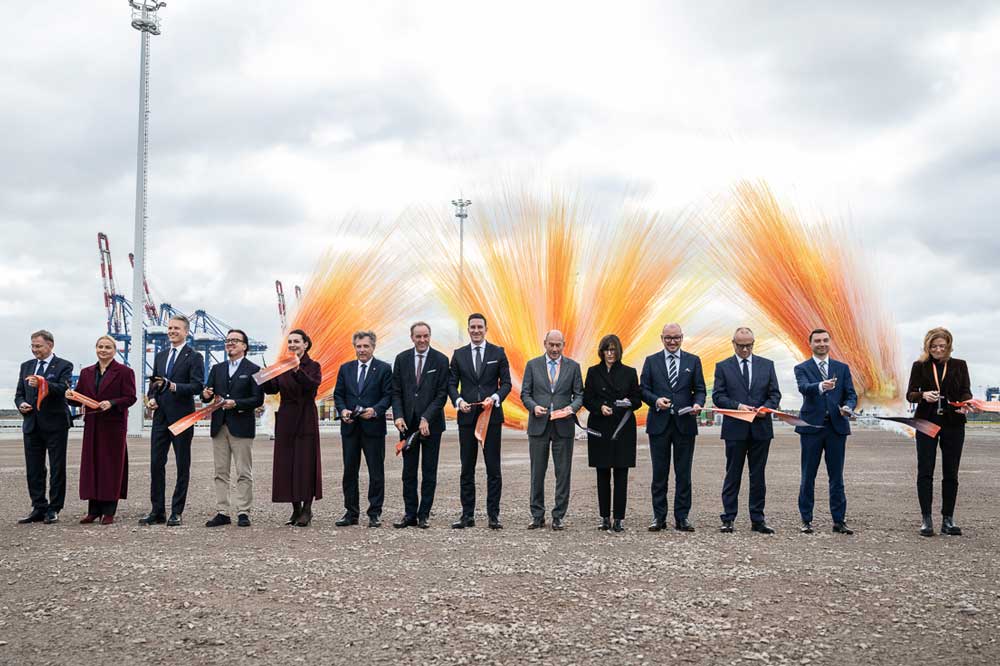




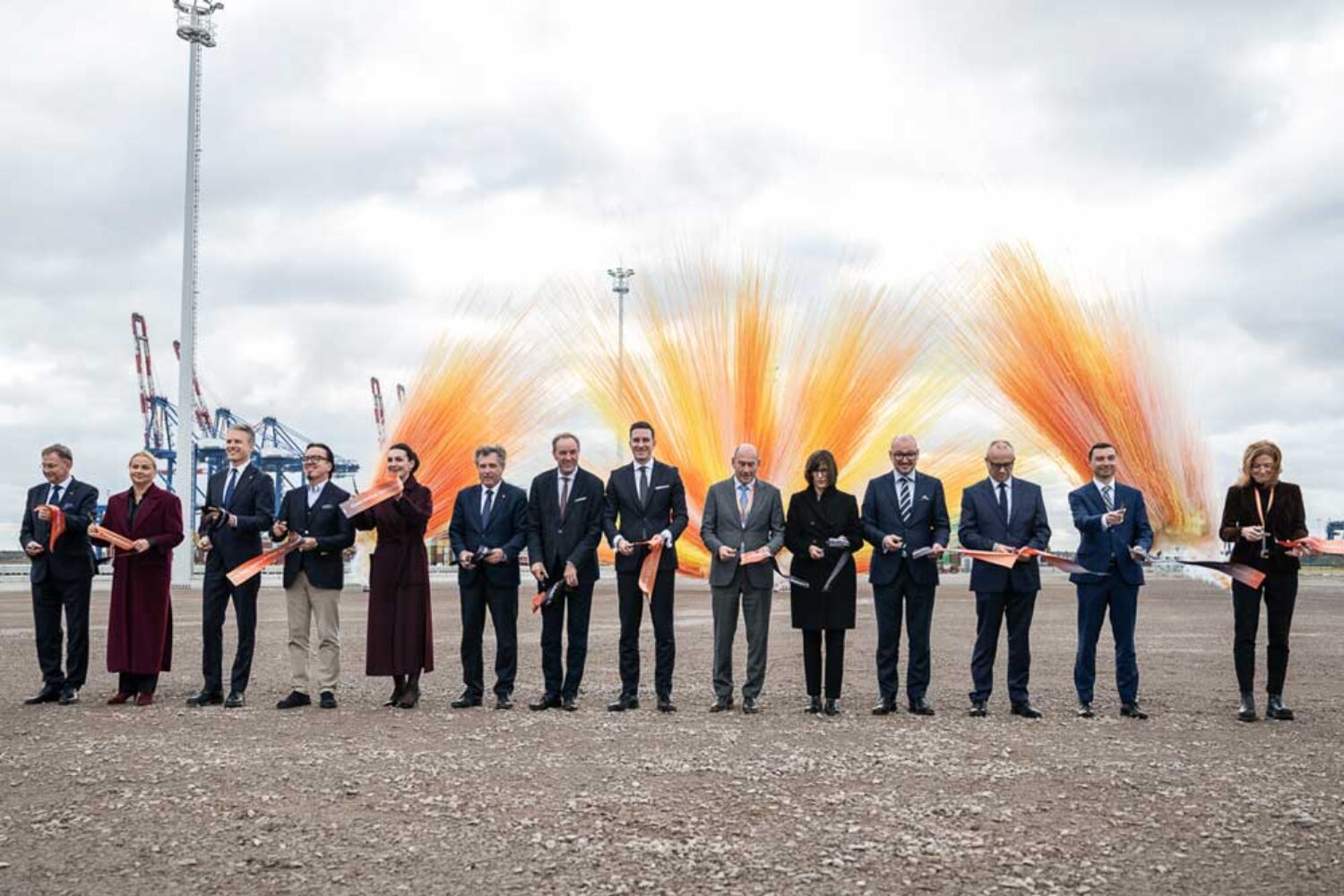
The new Gdańsk Offshore Installation Terminal T5 has been inaugurated in the port of Gdańsk. It is intended to support the expansion of offshore wind energy in the Baltic Sea.
Terminal T5 was built in the outer harbour of Gdańsk as a direct extension of the existing Terminal T1 Baltic Hub. As part of the project, a body of water was reclaimed, thereby creating a new land area of 21.3 ha. This area is intended for complex logistics operations relating to the construction of offshore wind farms in Poland’s exclusive economic zone in the Baltic Sea. The total investment amounts to around €273 million,
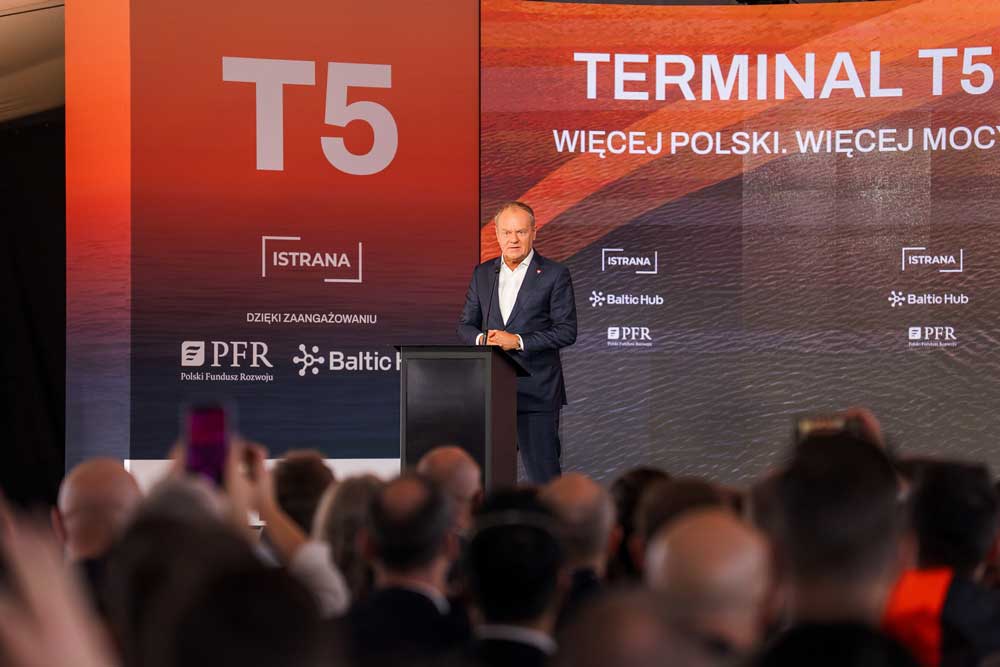
“Terminal T5 has been built on a site that was under water until very recently. Poland has grown by 21 ha. Symbolically, we can say that we have more of Poland, but we also have greater capabilities: offshore wind farms. Until recently, we were still in our infancy in this field; today, we are developing into an energy powerhouse on the Baltic Sea. It is very important to us that ‘more Poland’ also means greater participation by Polish companies in such investments. And here I can say with a clear conscience that absolutely everything is Polish, including the contractor. Our aim was not merely for Poland to build the T5 terminal and thereby take responsibility for offshore investments on an incomparably larger scale. We also wanted the terminal’s location here to attract significantly more Polish companies as subcontractors for various tasks involved in the installation of these huge wind turbines in the Baltic Sea,” said Prime Minister Donald Tusk at the opening ceremony.
The new terminal serves as a logistics hub for the reception, unloading, storage, preparation for transport and loading of large-scale wind turbine components. The infrastructure has been designed for the handling of particularly large and heavy components, including monopiles and other structures used in the construction of offshore wind farms.
Soon, more than 107 wind turbines destined for the ‘Baltica 2’ wind farm are set to be transported out to sea from the terminal.
Quays for installation vessels and Ro-Ro ships
One of the terminal’s key components is the quay facility, which enables the use of specialised vessels for offshore wind energy.
The so-called outbound quay is around 450 m long and is designed to handle jack-up installation vessels used in the assembly of wind turbines at sea. The second quay, known as the ‘inbound quay’, is around 350 m long. It is complemented by a RoRo berth approximately 105 m long, which enables the efficient delivery of components.
The quayside facilities and storage areas have been designed to withstand very high point loads. This is particularly important when storing and moving heavy components, as well as when preparing them for transport to offshore construction sites.
According to the information provided, the terminal was designed for long-term use. The intended operational lifespan as an installation base for offshore wind energy is at least 10 to 15 years.
From Gdańsk to ‘Baltica 2’
According to reports, the commissioning of Terminal T5 is set to transform the logistics involved in implementing offshore energy projects in the Baltic Sea. Until now, components for the ‘Baltica 2’ wind farm, developed by PGE and Ørsted, were transported from the Danish port of Rønne on Bornholm. Thanks to the new infrastructure, the preparation and dispatch of installation components can in future take place in Poland, at the port of Gdańsk.
In the initial phase of operation, the terminal will be used for the logistical handling of the ‘Baltica 2’ project. In later phases, the infrastructure is also set to be used for the ‘BC-Wind’ project, which is being developed by Ocean Winds. A reservation agreement regarding the use of the terminal has been signed for this purpose.
Access to suitably equipped port infrastructure in the immediate vicinity of the offshore project areas is of great importance to the entire supply chain. It enables more efficient transport of components, reduces logistics costs and minimises the risk of delays in installation work.
“Today’s opening of Terminal T5 does not merely mark the completion of yet another infrastructure project. Above all, it symbolises a bold vision for the future. It demonstrates that we are capable of implementing ambitious, modern and strategically important projects for the future of our country as a member of the European Union.”