




A new “Green Corridor” is being established on the main trade route between the Far East and Europe: Felixstowe and Yantian will thus be linked to ‘support the global shipping industry’s transition to low-carbon operations’.
The terminal operator Hutchison Ports has, through its Yantian subsidiary in China, signed an agreement with the British port of Felixstowe (PFL) on a cooperation initiative for an international “Green Shipping Corridor”. This will extend the Port of Shenzhen’s cooperation network for environmentally friendly shipping to a major European hub and strengthen synergies between Asia and Europe in order to support the global shipping industry’s transition to low-carbon operations, according to a statement.
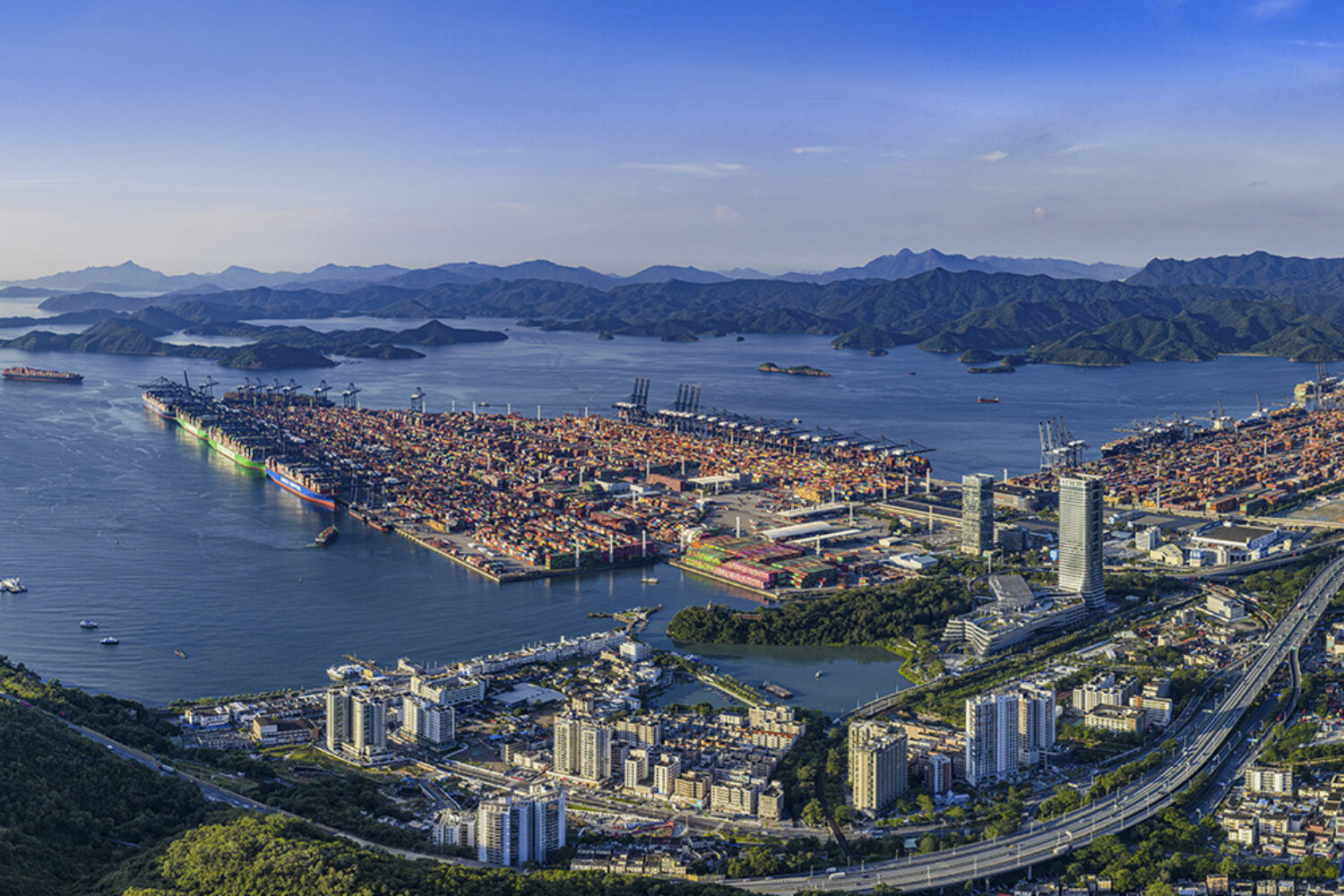
Yantian in Shenzhen has 20 large deep-water container berths. Officially, it is one of the few terminals in the Greater Bay Area (Guangdong-Hong Kong-Macao) designed to handle ultra-large container ships around the clock. The site enables unrestricted, two-way shipping around the clock for the world’s largest class of container ships – including 200,000-metric-tonne vessels with a capacity of up to 24,000 TEU, according to Hutchison Ports Yantian’s official description.
PFL, for its part, is the UK’s largest container port and handles almost 40 per cent of the country’s container trade. The port has set itself the target of achieving net-zero greenhouse gas emissions by 2035 and continues to invest in the electrification of facilities, renewable energy and smart transport technology.
The agreement links two major container hubs at either end of the trade route between Asia and Europe. The ports aim to deepen their cooperation in the areas of environmentally friendly and low-carbon development, clean energy, low-carbon technologies, smart port development and sustainable supply chains. The aim is to create a ‘Green Shipping Corridor’ that could serve as a model for broader international cooperation.
Shortly before this, the “International Green Shipping Corridor Alliance” had been launched at the “Global Sustainable Transport Forum 2026” in Beijing, comprising 45 founding members from 12 countries – including Yantian.
This collaboration builds on measures already taken in July: at the Shenzhen Port Global Supply Chain Development Conference (2026), Yantian signed a memorandum of understanding with 16 ports from 10 APEC member economies.
Lawrence Shum, Managing Director of Hutchison Ports Yantian, said: “As a founding member, we are mindful of the responsibility that comes with supporting this work. The Alliance was established to promote more sustainable shipping and to support the United Nations’ 2030 Agenda for Sustainable Development; whilst also contributing to the overarching goal of building a community with a shared future for humanity. The signing of the initiative was a concrete step towards further developing international green shipping corridors and strengthening cooperation between the parties involved.”
Clemence Cheng, Executive Director of Hutchison Ports, explained that the agreement marked a decisive step forward in the cooperation between the two ports: The partnership is evolving beyond traditional shipping-related networking into a new phase characterised by environmental cooperation, jointly developed standards and a shared responsibility for the outcomes.
In Yantian, attention is drawn to a number of key steps taken in the recent past: the shore power supply has been expanded, port equipment has been electrified, and ‘Smart Port’ technologies have been implemented. Over the past decade, cargo handling volumes have grown steadily, whilst CO₂ emissions per container have fallen by 32 per cent. All berths are now equipped with shore power connections, “and the use of cleaner fuels – including LNG and green methanol – is also being further promoted”, according to those in charge.
Looking to the future, the ports aim to deepen their cooperation in various areas. In doing so, they are working to harmonise their approaches to reducing emissions, make progress measurable and ensure the results of their cooperation are verifiable. In addition, together with partners across the entire supply chain, they will seek dialogue with government bodies in China and the United Kingdom to support the implementation of the UN 2030 Agenda for Sustainable Development. Through this collaboration, the two ports aim to establish a ‘green shipping corridor’ between Asia and Europe that can serve as a global benchmark.