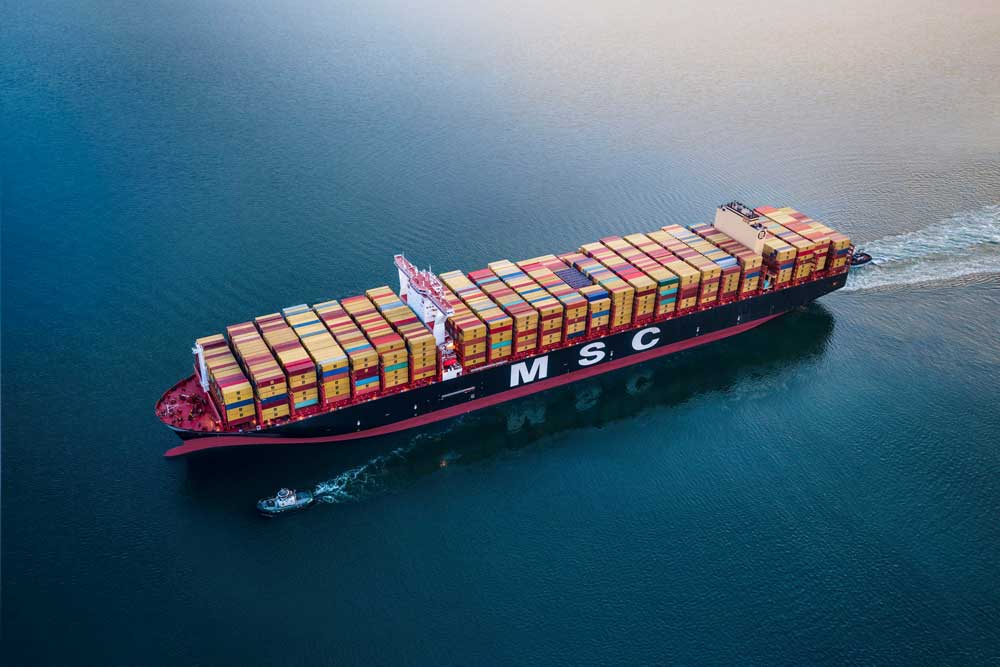




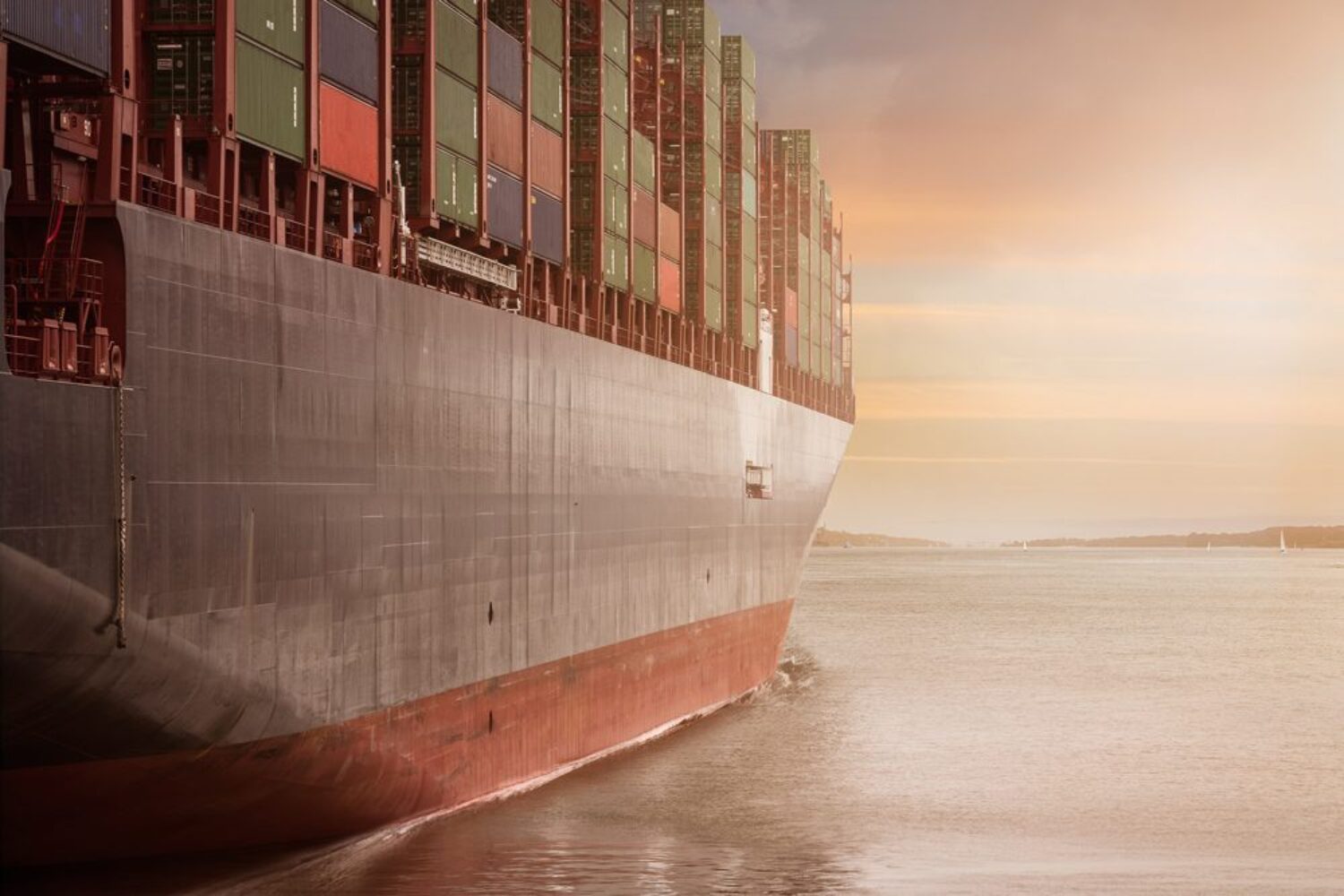
Global demand for new container ships is higher than ever – and continues to grow. Newbuilds are primarily powered by conventional fuel or LNG, whilst alternative fuels are less in demand.
The global order book for container ships has recently exceeded the 15 million TEU mark, and this figure is unlikely to fall significantly in the coming months. According to industry service provider Alphaliner, a further 40 ‘Megamax’ orders are expected before the end of the year, including from the shipping companies MSC and CMA CGM (neither of which has yet confirmed this) as well as Maersk and Yang Ming. With these orders, the order book would grow to over 16 million TEU before the end of this year.
What is significant here is not only the number and size of the vessels, but also the type of propulsion they use. According to Alphaliner, the majority of vessels ordered between 2024 and 2026 will be powered by LNG. Conventional propulsion systems have also made a ‘comeback’ in recent years, often fitted with scrubbers. Methanol, however – once seen as a beacon of hope for sustainable shipping – has become rather unpopular; hardly any of the newly ordered vessels are set to be powered by this fuel.
Currently, 88% of the active fleet is still powered by conventional fuel. In the order book, traditional heavy fuel oil still accounts for 32% of the chosen propulsion types. Among the newbuilds on order, the majority will be powered by LNG, which will power 56% of the new ships. As for methanol, it accounts for only 12% in total – calculated on the basis of capacity. Taken together, however, this means that over two-thirds of newbuilds will be fitted with dual-fuel propulsion systems, enabling operation on alternative fuels.
LNG dominates the order book
LNG is the new heavyweight among fuels: according to Alphaliner, 2.3 million TEU of new capacity powered by this fuel has been ordered in 2026 alone; the figure for the previous year was 2 million TEU. The 40 ‘Megamax’ vessels mentioned above are expected to add a further 1 million TEU to LNG-powered capacity this year.
LNG is so popular with shipowners because it is already readily available on the market and, compared with conventional fuels, can reduce emissions by up to 20% per TEU, which also cuts costs. On a ‘well-to-wake’ basis – that is, from fuel extraction to combustion – this calculation can, however, be misleading: if LNG is extracted via fracking, for example, this results in harmful methane emissions. In a recent analysis, however, Alphaliner notes that, given the long service life of the LNG fleet, emissions savings will materialise over the coming years, provided that more and more fuel can be sourced from renewable sources (biogas or synthetic LNG).
The situation is different for methanol, however. The Alphaliner data lists only two newbuilds, each with a capacity of 9,000 TEU, which were ordered in January this year; apart from these, no newbuilds have been added. Conventional fuels, on the other hand, have gained significantly: 2 million TEU were newly ordered this year alone, whilst the figure for 2025 was already 1.94 million TEU. Compared with 2024, the figure has doubled.
Since mid-2025, shipowners and operators have begun placing orders for numerous vessels in the medium-sized segment. According to Alphaliner, these vessels are intended not only to increase the respective company’s market share but, above all, to replace ageing tonnage. The majority of these orders are for ships below the 7,000 TEU mark with conventional propulsion.
“Willingness to experiment” mostly seen with smaller vessels
The new orders can therefore be divided into three categories. For vessels over 15,000 TEU, the focus is often on reducing emissions. To achieve this, LNG is frequently used (72% of orders). The reasons for this are availability, bunkering, safety and vessel operation – LNG is the “easy option”, according to Alphaliner.
In the mid-range segment – particularly in the Panamax sector, where there is a significant need for replacement – conventional fuel dominates, however. It is only in the size class below 1,000 TEU that shipowners and operators have shown a greater “willingness to experiment”. The choice of alternative fuels is often driven by the need to comply with green corridors or because the vessel will be operating in emission control areas. A third of vessels in this size class are therefore powered by electric propulsion, wind-assisted propulsion (WAPS), ammonia, methanol or LNG.
With a view to the forthcoming decision by the IMO during the next meeting of the Marine Environment Protection Committee (MEPC 85), it is expected that an agreement on the Net-Zero Framework will be reached. However, CO₂ targets will only be set up to 2035, Alphaliner reported. Ships ordered now, on the other hand, are likely to remain in service for the next 20 to 25 years.