

Driven by the shipping industry’s transition towards lower-emission operations, battery-powered vessels are emerging as an increasingly important development. At the same time, challenges remain, including thermal runaway in lithium-ion batteries, fire protection, the risk of total blackout due to highly integrated systems and new designs that fall outside existing rules.
To address these challenges, China Classification Society (CCS) has introduced a technical risk assessment service for battery-powered ships. Based on the society’s experience in rule development and ship surveys, the service is intended to support risk management throughout a vessel’s lifecycle.
The service includes safety risk assessments for battery-swapping operations using containerised power supplies, covering lifting, transport, storage and charging. CCS also carries out design risk assessments for battery power systems using methods such as Failure Mode and Effects Analysis (FMEA) and Hazard Identification (HAZID). These assessments are tailored to different operating areas, vessel types and operational profiles.
Based on the assessment results, CCS develops risk control measures and optimisation recommendations with support from specialists in batteries, structures, fire protection, electrical systems and related disciplines.
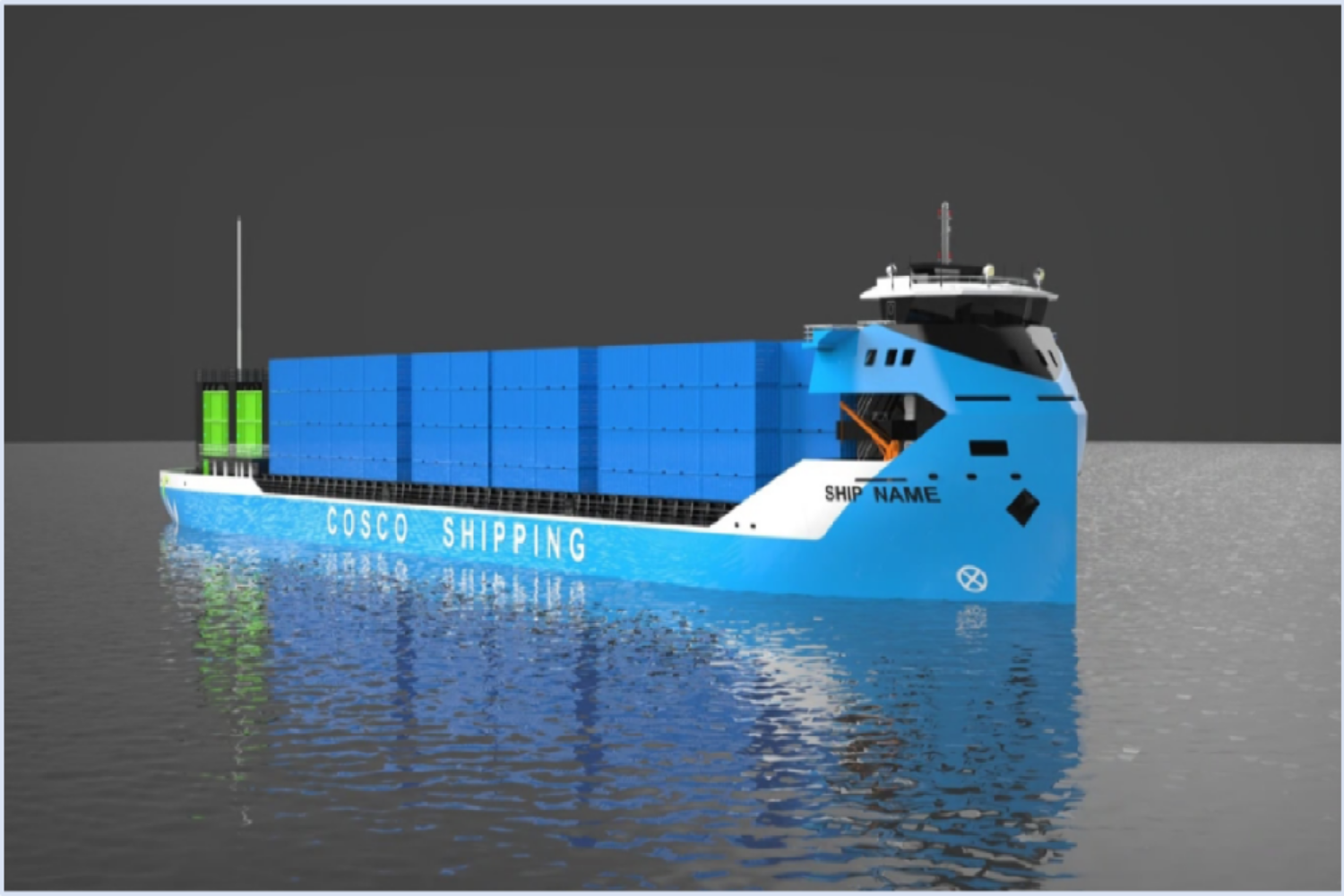
According to CCS, the service has already been applied to projects including China’s first battery-swapping inland vessel, the 64 TEU „Guochuang“, COSCO Shipping’s 700 TEU battery-electric containership, a 10,000-tonne battery-powered bulk carrier, Hong Kong New World First Ferry’s carbon-fibre high-speed passenger craft and electric tugboats operating at the Three Gorges locks.
CCS states that it will continue developing risk assessment technologies to support the safe introduction of battery-powered shipping.
Hall B2, Booth 408