




Since the beginning of July, significantly fewer bulk carriers have been passing through the Panama Canal. The organisation BIMCO expects increasing competition for transit slots and further detours for the dry-bulk fleet.
The number of bulk carrier transits through the Panama Canal has fallen by 22 per cent year-on-year since the beginning of July. According to the shipping association, bulk carriers are increasingly competing with other vessel segments for limited transit capacity.
Tankers are taking up additional slots
Tankers in particular are taking up additional slots, as the US has expanded its energy exports to Asia, explained Filipe Gouveia, Shipping Analysis Manager at BIMCO. Added to this are expectations of falling water levels as a result of El Niño.
“Bulkers are facing stiffer competition for transit slots, particularly from tankers,” said Gouveia. Lower water levels could lead to further restrictions and intensify competition for available capacity even further.
Detours boost demand for tonne-miles
The Panama Canal plays a particularly important role for the US dry bulk trade. According to Bimco, the US is either the country of origin or the country of destination for 54 per cent of the dry bulk cargo transported via the waterway. The most important cargoes include grain, steel, fertilisers, coal, salt and petroleum coke. These are primarily transported by Supramax, Handysize and Panamax bulkers.
According to BIMCO, the decline in transits is already leading to rerouting via the Cape of Good Hope or Cape Horn. This is lengthening average voyage distances and, consequently, increasing demand for tonne-miles.
During the previous El Niño phase in 2023/24, the significant decline in bulker transits through the Panama Canal increased global demand for tonne-miles in the dry bulk segment by around 1 per cent, according to Gouveia.
Canal Authority reduces capacity
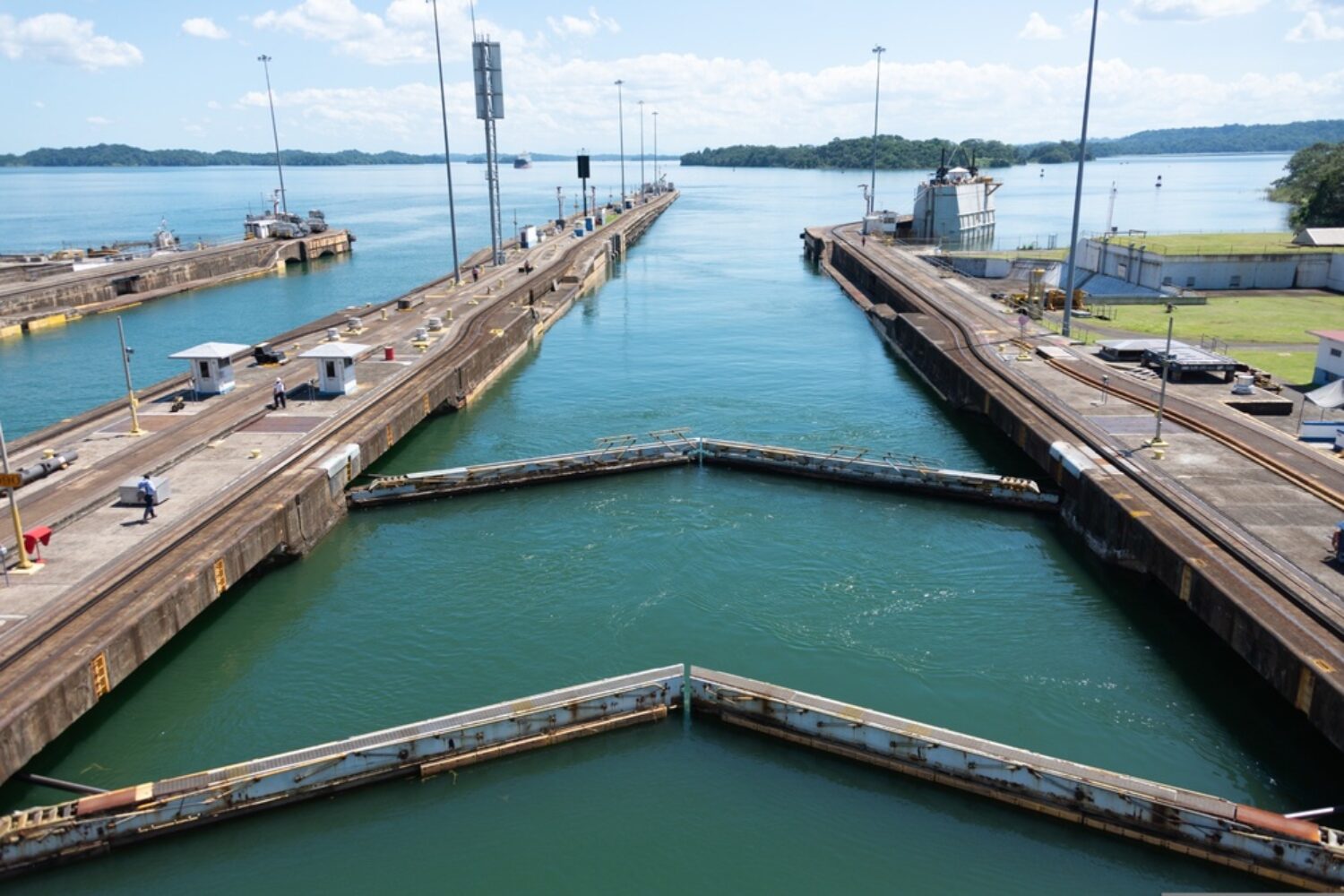
In view of expected lower water levels in Gatún Lake, the Panama Canal Authority has introduced several restrictions. The maximum permitted draught in the Neopanamax locks has been gradually reduced since July from 15.2 m to 14.3 m.
In addition, the number of daily transits has been reduced, initially from 36 to 34 and subsequently to 32 vessels. A plan submitted to the Panamanian Parliament envisages an average of just 29.5 transits per day for October.
However, the draught restrictions have so far had only a limited impact on the dry bulk sector, as most bulk carriers use the Panamax locks rather than the Neopanamax locks. The main vessels directly affected are individual Capesize vessels transporting coal from Colombia to Mexico.
Bimco expects, however, that the restrictions on bulk shipping will become more significant. The export season for US maize and soya beans is approaching its peak. Around 15 per cent of US seaborne exports of these two agricultural commodities normally pass through the Panama Canal on their way to East Asia and the west coast of the Americas.
Should competition for the limited slots continue to intensify, Bimco believes that bulk carriers are likely to increasingly opt for alternative routes. Furthermore, a larger proportion of US exports could be handled via ports on the Pacific coast.
“Overall, the decline in Panama Canal transits will extend the average voyage distances for bulk carriers and increase demand for tonne-miles,” explained Gouveia.