




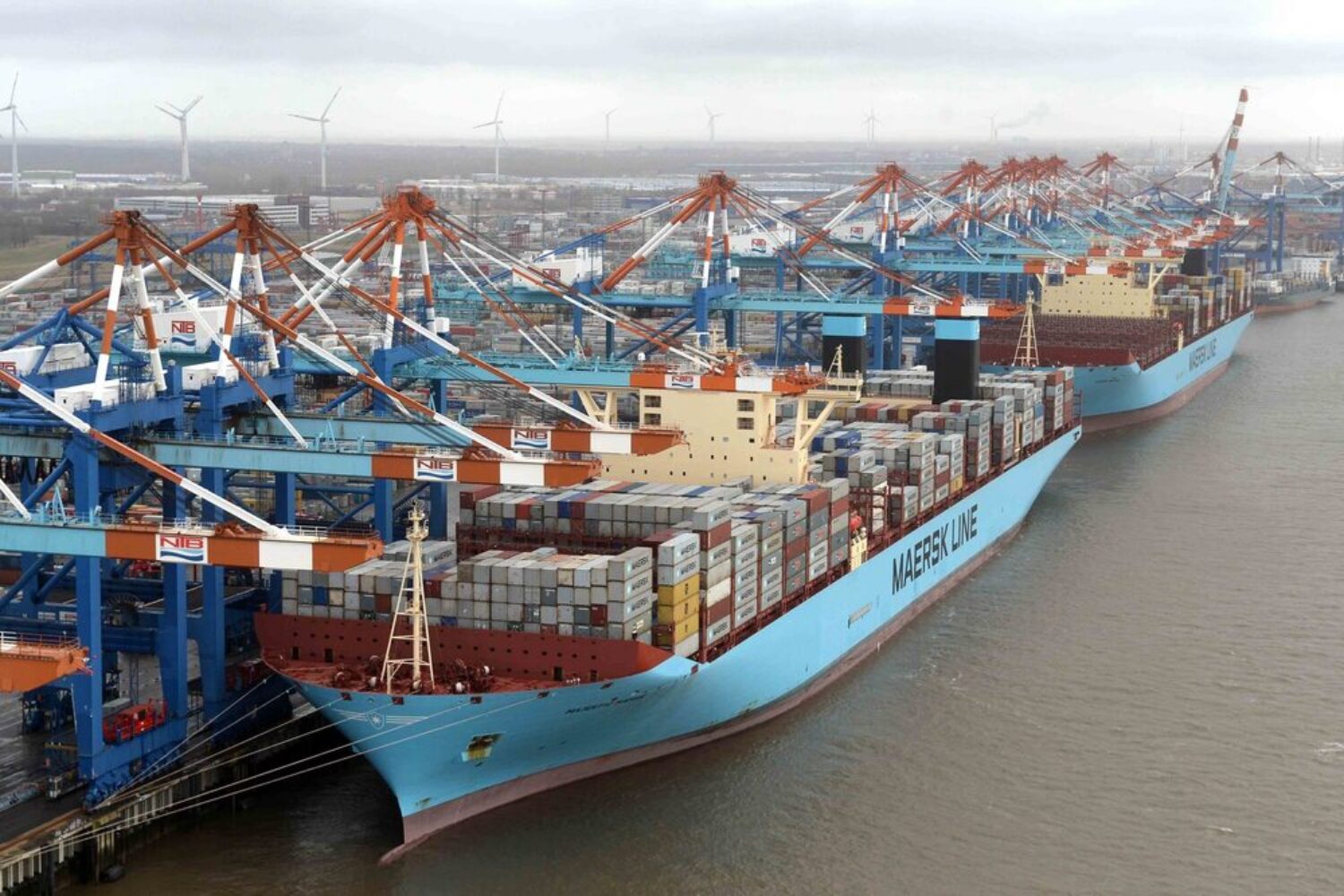
Like Germanys biggest seaport Hamburg, Bremerhaven also recorded more container throughput in the year under review. The increase was even greater on the Weser than on the Elbe.
Bremen’s Ministry of Economic Affairs, Ports and Transformation has presented the handling figures for 2025.
According to this, a total of 4.9 million TEU passed over the quaysides on the Lower Weser in the year as a whole. This represents an increase of 10.3% compared to 2024. The balance sheet shows that Bremerhaven has grown more strongly than Hamburg. In Germany’s largest seaport, growth was “only” 7.3%. However, at 8.3 million TEU, the total volume on the Elbe is still well ahead of box handling in Bremerhaven.
65 million tons are reported for the total handling of all types of goods in the ports of Bremen – including the volumes in the city ports of Bremen. This results in an increase of 5.4%. This also shows the greater dynamism compared to Hamburg. There, growth amounted to 2.6% to 114.6 million tons.
As was already foreseeable in the course of the year, Bremerhaven had to accept a decline in vehicle handling. However, this was less than feared. Just under 1.3 million vehicles represent a decline of 0.1%.