


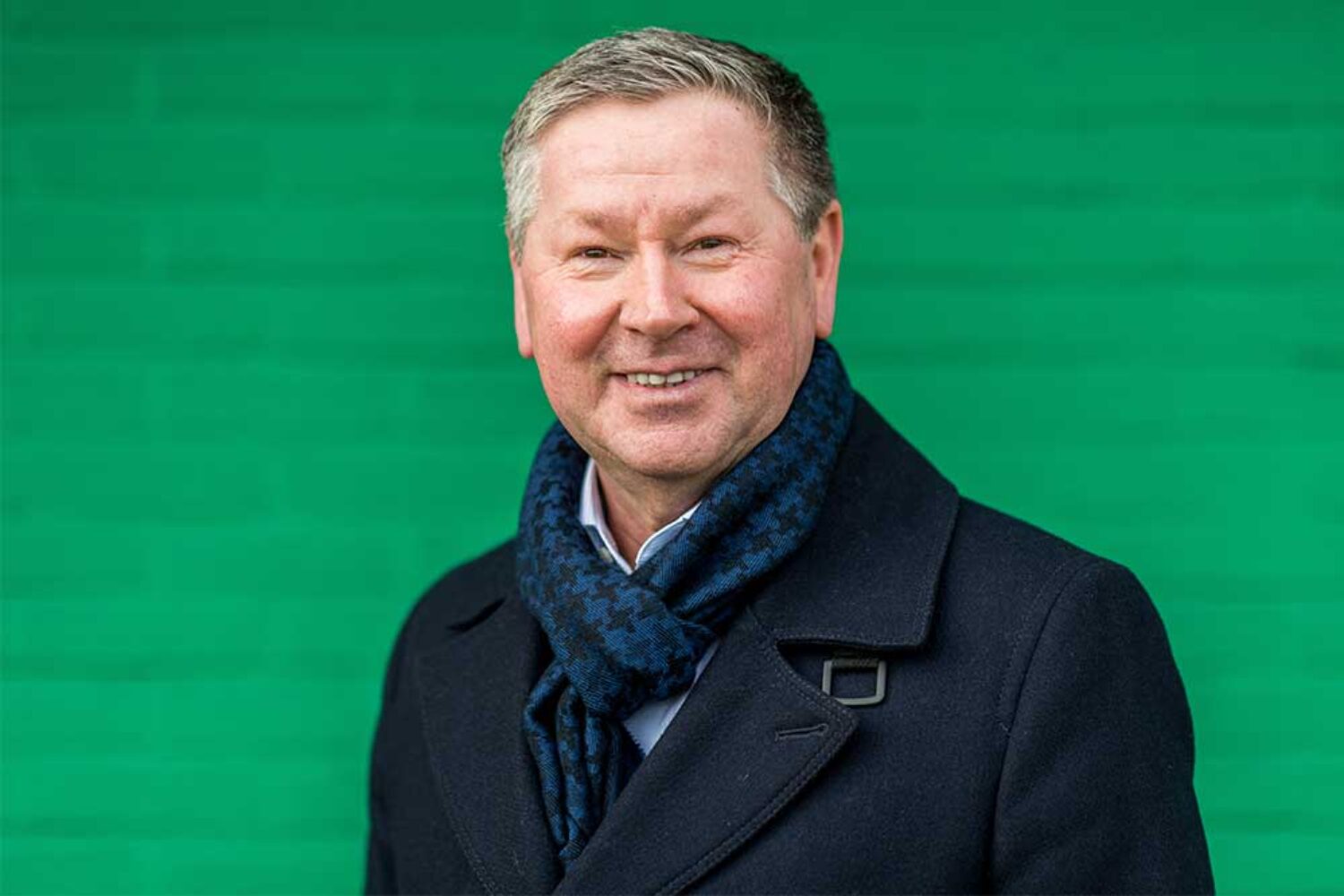
The breakbulk terminal operator Zuidnatie is expanding in Antwerp, Europe’s most important breakbulk hub. The expansion involves an additional 40,000 square metres. CCO Marc van Aken speaks to HANSA about a potential expansion into other ports.
Zuidnatie has taken over a 40,000 m2 concession area previously operated by the commodities trader Somex. “This investment provides the company with additional operational capacity and supports Zuidnatie’s continued growth,” according to a statement issued today.
The site is situated opposite Zuidnatie’s existing “South Terminal’” The owner-managed family business plans to start the necessary construction work for the expansion on 1 January 2027. Initially, the new site is intended to provide additional capacity for activities currently handled at the existing South Terminal – which has already almost reached its capacity limit.
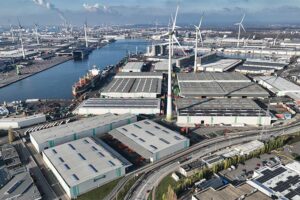
According to the information provided, operations will initially focus on logistics activities away from the quayside, including the handling and storage of containers. “This expansion gives us the space we need to continue growing and to serve our current and future customers even better,” says Stéphanie Feys, Managing Director of Zuidnatie. “Looking ahead, we plan to invest in several state-of-the-art warehouses at the new site.”
Zuidnatie considers itself well-positioned in the terminal market. Last year, around 2.2 million tonnes of general cargo were handled. Various liner services operated by MPP shipping lines are handled here; the customer list includes carriers such as MACS, AAL, Chipolbrok and BOCS, amongst others. Even large 60,000-dwt vessels can be handled – although this class of vessel is not part of Zuidnatie’s core business.
“Of course, diversification is very important these days. So you have to be vigilant and always keep an ear out for the latest developments. Our core business, however, is liner services; we are very proud of this, as these are all long-standing customers,” says CCO Marc van Aken in an interview with HANSA.
Zuidnatie operates two multi-purpose terminals and one container terminal in Antwerp, with a total quay length of more than 3.2 km. The general cargo terminal has 1.7 km, whilst the other multi-purpose terminal has 1.3 km. The most important cargo segment is steel. However, components for wind turbines are also handled. “Rotor blades are particularly challenging because they are so long; storing them at a general cargo terminal for seagoing vessels isn’t exactly straightforward, as it requires a great deal of space. But we can manage it and have already done so,” says the CCO.
Alongside customs duties and geopolitical upheavals, he cites the shortage of skilled workers as one of the biggest challenges: “In our industry, experience is crucial, because every day is different. One day you’re handling heavy cargo, the next it’s oversized loads – and all of this requires different handling methods. That’s why you need highly qualified staff. That’s why we train lots of young people.”
Zuidnatie has been on a growth trajectory in Antwerp for some time now. Last year, two warehouses were acquired into which trains can drive directly. “This means we can unload even moisture-sensitive cargo at any time,” says van Aken. In addition, a new hall has been built for cutting steel coils to size. “We firmly believe in the importance of value-added services. It’s not just about ship handling.”
On the one hand, the company is constantly assessing where further growth is possible. However, the manager rules out international expansion: “We’re focusing on the Antwerp site and optimising our processes wherever possible. We’ve often been asked whether we want to operate abroad, but we’re staying in Antwerp. We are satisfied with what we do and strive to offer the best possible service.”
However, hinterland connections currently rely primarily on road transport. “Unfortunately,” as the CCO emphasises, as this is unfavourable for land-based traffic. “Rail transport is certainly possible, but – to be honest – it is still underused. And then, of course, there are the inland waterway vessels, which have to contend with low water levels – an issue that is once again becoming a topical one in Germany.” Germany is one of the port’s most important hinterland markets.
The CCO believes there is much more potential to be realised in the rail sector. Although Germany and Belgium – as well as France and the Netherlands – are excellently connected by rail, “the potential is still not being utilised sufficiently.”
Bulk cargo is also handled at Zuidnatie, though not necessarily from land: “The majority of our bulk cargo handling takes place directly from inland waterway vessel to seagoing vessel or vice versa. We have grabs and specialised cranes for bulk cargo, enabling us to carry out this work.”