


The discussion around hull air lubrication is shifting from headline performance figures to predictable, vessel-specific results. While the industry has traditionally focused on fuel savings, emissions reductions and percentage improvements, shipowners are increasingly asking what a system will deliver under their own operating conditions.
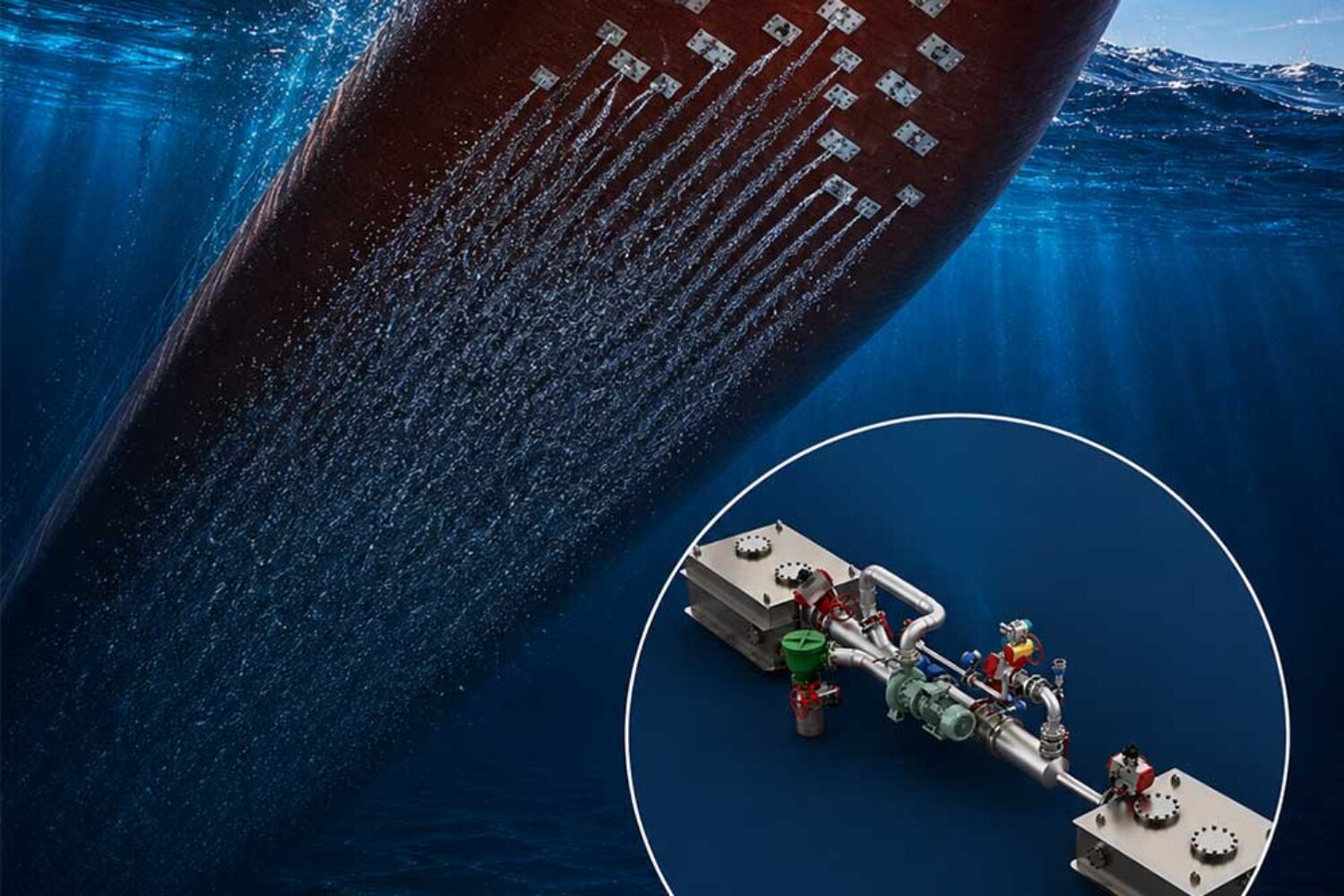
Armada Technologies has developed its Passive Air Lubrication System (PALS) to address this requirement. Rather than relying on energy-intensive compressors, PALS uses the vessel’s forward motion to drive seawater through internally mounted venturi pods. Each pod draws air from above deck, creates an air-water premix and injects microscopic bubbles into the hull boundary layer to reduce frictional resistance. According to the company, eliminating compressors reduces power consumption, maintenance requirements and system complexity while simplifying installation.
A key feature of PALS is its wider operating window. Traditional compressor-based systems perform best within a limited range of vessel speed, draught and sea state. PALS is designed to maintain a stable lubricating boundary layer across a broader range of operating conditions. Independent pod control adjusts air delivery as conditions change, providing more consistent energy savings throughout a vessel’s operating profile rather than under ideal sea trial conditions.
According to Armada Technologies, air lubrication performance depends on factors including hull form, operating profile, draught, speed and environmental conditions. Cavitation tunnel testing, towing tank trials, CFD modelling and full-scale vessel validation have been used to strengthen the company’s performance prediction capability.
Through its partnership with Erma Tech Group, Armada combines its air lubrication technology with a global network for engineering, commissioning, service and technical support.
Hall A1, Booth 218