



Besides geopolitical factors and shifts in trade flows, a strike lasting several days also had a direct impact on cargo handling at the Antwerp-Zeebrugge twin port in the first half of the year. The bottom line is a decline.
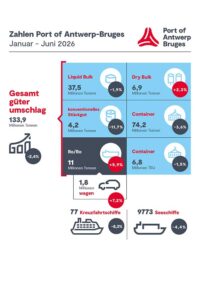
In the first half of 2026, the Port of Antwerp-Bruges handled 133.9 million tonnes of cargo – a fall of 2.4% compared with the previous year. However, in a statement, port officials also highlighted the positive aspects of the results: “Despite geopolitical tensions, trade conflicts, exceptional operational disruptions and a difficult economic environment, the decline remained limited,” they said.
Whilst RoRo handling increased (+5.9%) and bulk cargo declined slightly (-1.3%), the decline was primarily seen in the general cargo segment. According to the figures, container handling played “a decisive role” in this.
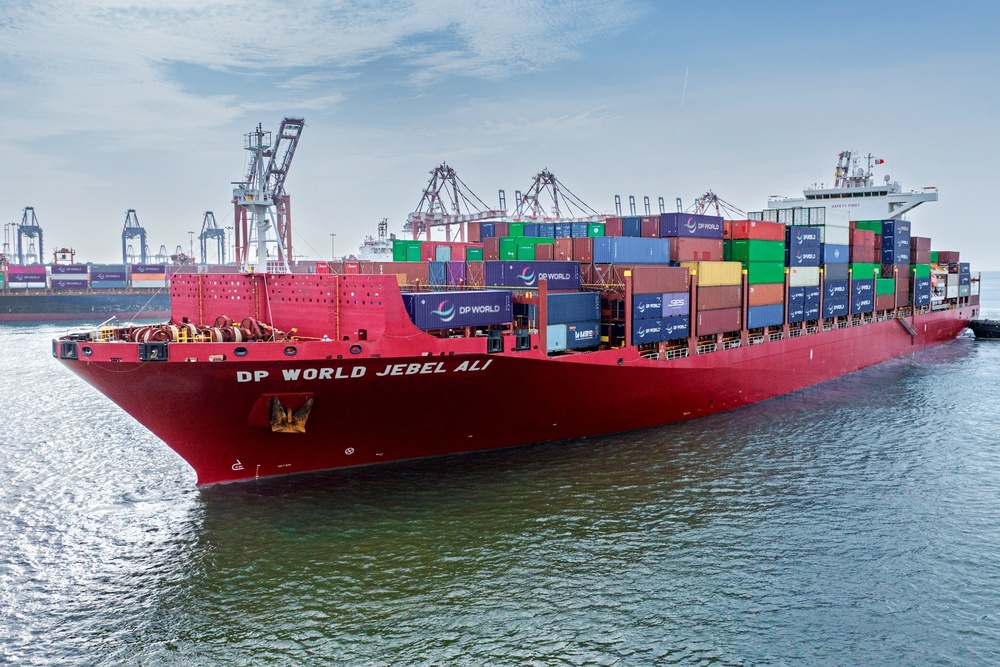
Container throughput, measured in TEU, fell by 1.5% to 6.8 million TEU in the first six months; in tonnes, the decline amounted to 3.6%. In particular, exports of loaded containers fell short of expectations (-5.7%). This reflects the weak export performance of the Western European economy. At the same time, the rise in the handling of empty containers (+13.7%) points to a growing imbalance between imports and available export freight, according to the statement.
Johan Klaps, Chairman of the Board of Directors of Port of Antwerp-Bruges and Port Commissioner of Antwerp: “The first half of the year shows not only how vulnerable international logistics chains are to disruptions, but also how resilient our port is. Despite successive operational challenges, the Port of Antwerp-Bruges managed to maintain its market share in container traffic. This confirms how crucial investments in accessibility and capacity, as well as a reliable port organisation, are to the attractiveness of our port and to shipping lines, industry and the entire logistics sector.”
The decline in container throughput was exacerbated by exceptional operational disruptions. A four-day strike in the shipping sector in March resulted in an estimated loss of 100,000 TEU. According to the port authority, the oil spill in the Deurganckdok in April resulted in an additional loss of around 85,000 TEU. In June, strikes by pilots once again caused disruption and an estimated loss of 75,000 TEU.
Geopolitical factors are altering trade flows
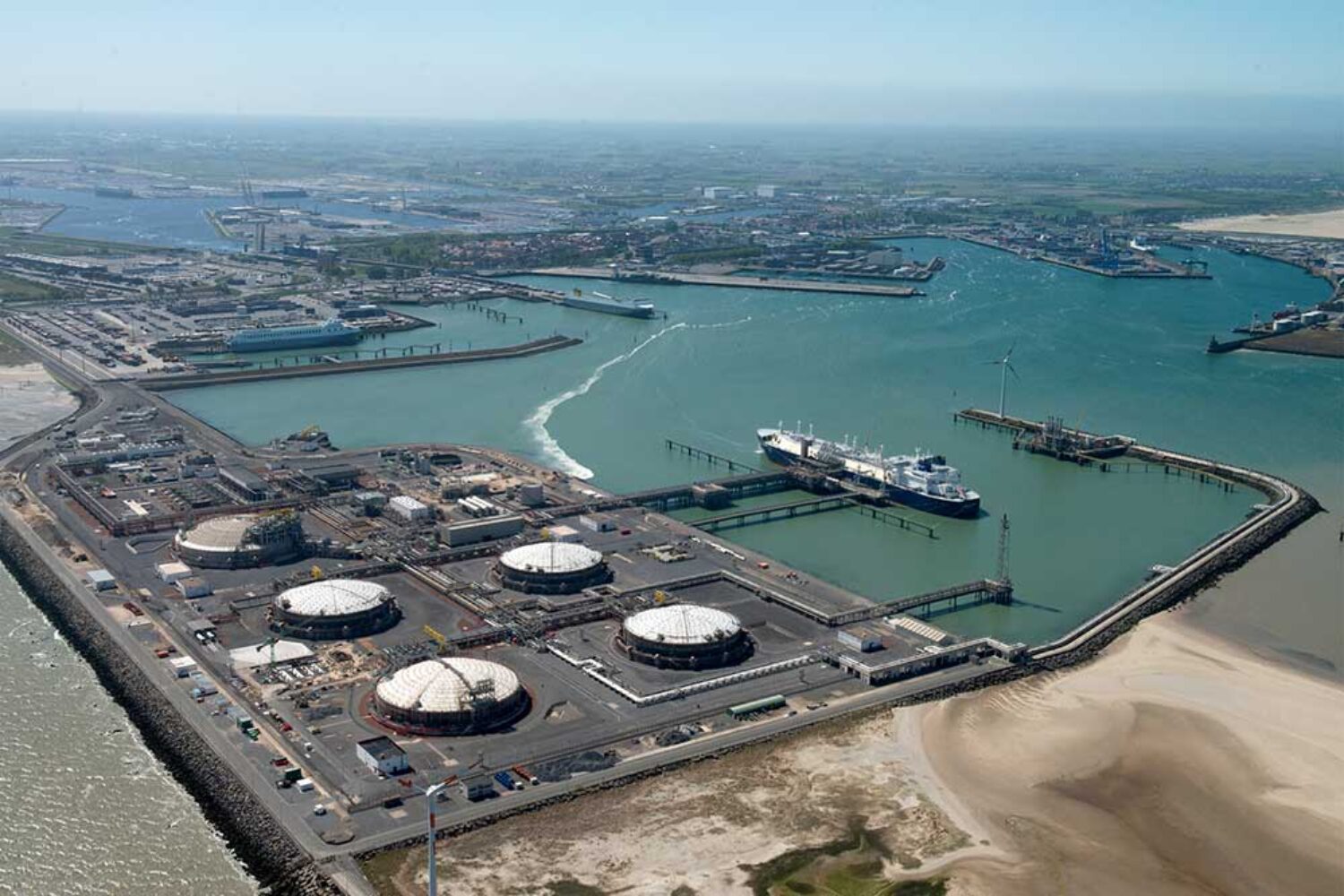
Geopolitical developments in the Middle East had a significant impact on trade flows. Imports from countries around the Persian Gulf were 57% below the previous year’s level in the first half of 2026. Energy flows were particularly affected: following the last LNG (Liquefied Natural Gas) delivery from Qatar on 23 March, imports from the region virtually ground to a halt from April onwards. LNG deliveries from Qatar fell by 66%. Container shipping lines adjusted their schedules and developed alternative routes via the Red Sea and the eastern Mediterranean. As a result, traffic with the Persian Gulf fell sharply, whilst other ports in the Middle East gained in importance. The net loss of cargo from the Persian Gulf amounted to around 2.2 million tonnes in the first half of the year. The greatest impacts remain indirect in nature: higher energy, bunker and transport costs, as well as disruptions to supply chains, are placing European industry under additional pressure.
US trade policy also made its presence felt. Although the United States remained the Port of Antwerp-Bruges’ most important trading partner, the volume of loaded containers imported fell by 10.4%, whilst the volume of exports fell by 16.5%. Exports of general cargo to the US, particularly steel, fell by 32%. Liquid bulk cargo increased due to higher volumes of LNG and chemicals. China remained a growth market with rising container traffic, vehicle volumes and steel shipments. LNG deliveries from Russia rose by 12.5% in the run-up to the European import ban due to come into force in 2027.
Other cargo segments show resilience
Apart from container throughput, the other segments had “held their own well”, the statement added. Ro-Ro throughput rose by 5.9%, driven by higher volumes of new vehicles and unaccompanied cargo. The number of new vehicles handled rose by 7.7% to 1.695 million units. This is primarily attributable to growth from China (+25.5%) and Japan (+5.5%).
Bulk cargo traffic also remained stable. Dry bulk rose by 2.2%, whilst liquid bulk fell slightly (-1.9%) following a weak start to the year. Significant shifts were observed in this segment, including growth in LNG (+1.3%) and naphtha (+31.3%). General cargo handling remained under pressure and fell by 11.7%. This was due to weak demand from European industry, US import tariffs on steel, high energy and transport costs, and uncertainties surrounding the Carbon Border Adjustment Mechanism (CBAM) and European import quotas. The increase in steel volumes from China (+44.8%) could only partially offset the decline in other trade flows.
Rob Smeets, CEO of Port of Antwerp-Bruges, said: “The first half of the year shows that Port of Antwerp-Bruges continues to fulfil its role as the gateway to Europe, even under exceptional circumstances. Trade flows are constantly adapting to a new geopolitical reality. This requires flexibility from our port community and underlines the importance of continuous investment in capacity, efficient infrastructure and sustainable logistics. At the same time, the international situation remains extremely uncertain. Europe must therefore continue to focus on a strong industrial policy and a competitive investment climate.”