

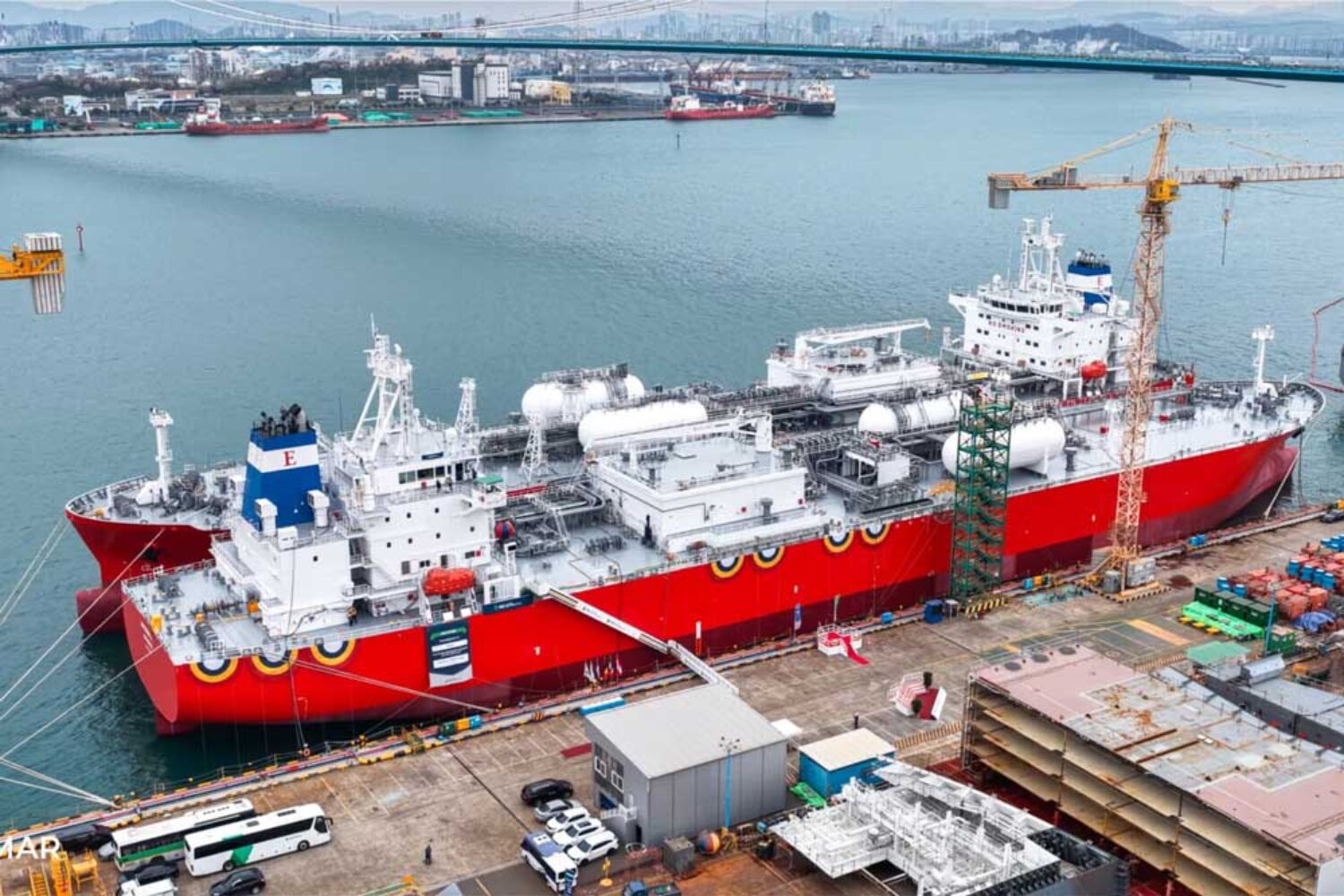
The “Antwerp” is the world’s first tanker to both use and transport ammonia as fuel. The engine was supplied by the Swiss company WinGD.
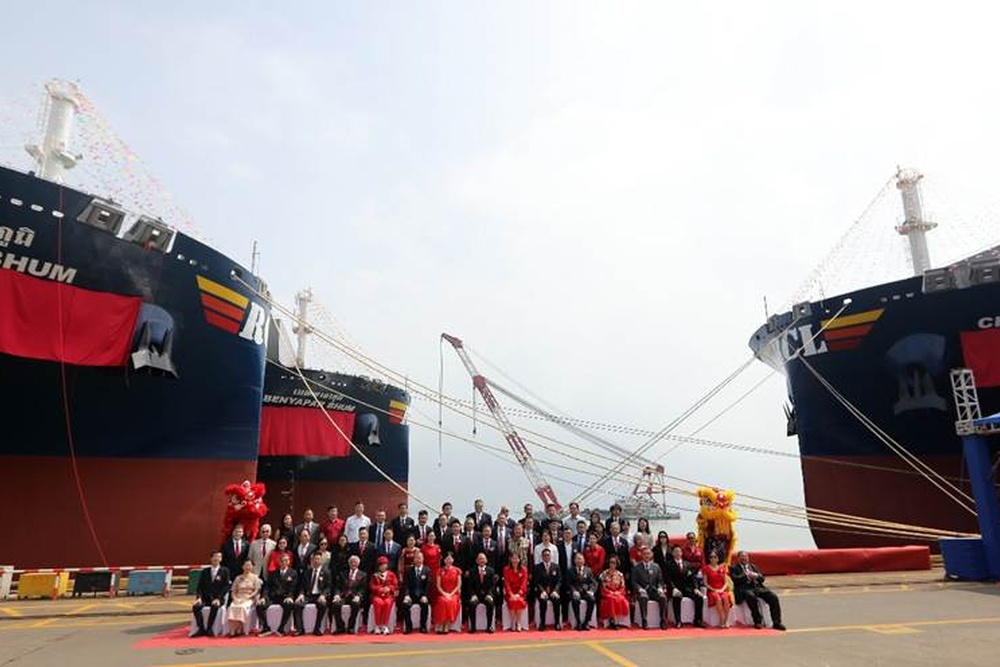
Exmar, a Belgian company specializing in energy transport and a spin-off of the CMB Group, has taken another step toward zero-emission shipping with the delivery of the “Antwerpen.” The tanker is the world’s first ocean-going vessel that not only transports ammonia but can also use it as fuel. This is made possible by a dual-fuel engine from WinGD.
“Beyond its role as a marine fuel, ammonia has the potential to support the decarbonization of a wide range of industries, including power generation, manufacturing, and transportation,” Exmar stated. “By enabling the large-scale transport of clean hydrogen, ammonia can play a key role in reducing global CO2 emissions and accelerating the transition to a low-carbon economy.”
By using this fuel, the “Antwerpen” will be able to reduce emissions by up to 90%. Furthermore, ammonia is one of the most efficient hydrogen carriers and enables the safe and efficient transport of renewable hydrogen over long distances. “In this way, clean energy generated in one part of the world can be delivered to another and used there, contributing to the global availability of sustainable fuels.”
The “Antwerpen” is a medium-sized ammonia/LPG tanker with a tank volume of 46,000m³. The insights gained from operating the vessel are intended to advance the use of ammonia in the industry in general. According to Exmar, the experience gained can be applied to other ship types. The “Antwerpen” will be followed by three sister ships, starting with the “Arlon.” The last ship in the series is scheduled for delivery in 2027; Exmar LPG France is the owner of all newbuilds.
“Ammonia propulsion is no longer just a theory—we are already using it. Change comes through action, not debate,” said Carl-Antoine Saverys, CEO of the Exmar Group. “This success reflects our collective expertise and our commitment to sustainable shipping.”
Engine technology from Switzerland
The ship’s engine is an X52DF-A from WinGD. For the Swiss company as well, the successful sea trials and the delivery of the “Antwerpen” mark a significant achievement. Together with Exmar, the engine manufacturer HD Hyundai Engine Machinery Division, and the shipyard HD Hyundai Heavy Industries (HHI), they have demonstrated the suitability of ammonia as a marine fuel.
“We are proud to be involved in the delivery of the world’s first ocean-going vessel powered by ammonia—a groundbreaking achievement made possible by intensive and closely coordinated development work,” said Sebastian Hensel, Vice President of R&D at WinGD. “By bringing together expertise from across the entire maritime value chain, we have been able to demonstrate that the transition from concept to commercial reality for ammonia propulsion can be achieved through safe, reliable, and fully automated engine technology.”
Sotiris Topaloglou, Global Head of Testing & Validation at WinGD, explained: “The year 2026 was pivotal for ammonia as the next-generation marine fuel—from the factory and type approval tests in January, through the successful sea trials of the ‘Antwerpen’ in May, to the recent delivery in June. This milestone was preceded by years of research, extensive testing, and rigorous validation procedures to overcome all technical challenges and create a propulsion solution that is not only safe but also enables the emission reductions the industry needs to achieve its net-zero target for 2050.”
“Innovation requires vision, commitment, and interdisciplinary collaboration to truly break new ground—and that is exactly what WinGD, Exmar, and HHI have achieved with the X52DF-A,” concluded Hensel. “With this engine, we offer shipowners a real choice when investing in the fleet of the future: a safe and efficient dual-fuel engine that guarantees compliance with current regulations while also being ideally equipped for tomorrow’s stricter emission limits.”
Successful sea trials
WinGD’s X-DF-A two-stroke engine features high-pressure ammonia injection, which is supplemented at full load by a small, targeted amount of pilot fuel—approximately 5%. Type Approval Testing (TAT) and Factory Acceptance Testing (FAT) were completed in January 2026 at the HD Hyundai Heavy Industries Engine & Machinery (HHI-EMD) plant in South Korea. They took place under the supervision of Exmar and in the presence of the classification society Lloyd’s Register (LR) and representatives of all major classification societies.
According to WinGD, the recent sea trials of the “Antwerpen” in South Korea confirmed that the engine performs on par with WinGD’s comparable diesel-powered X-engines in terms of load behavior, dynamic response, and fuel efficiency in both ammonia and diesel modes.
“With 40 orders for the X-DF-A engine spanning various ship types—including gas and bulk carriers, tankers, and container ships—ammonia is well on its way to playing a significant role in the future fuel mix,” WinGD announced.