




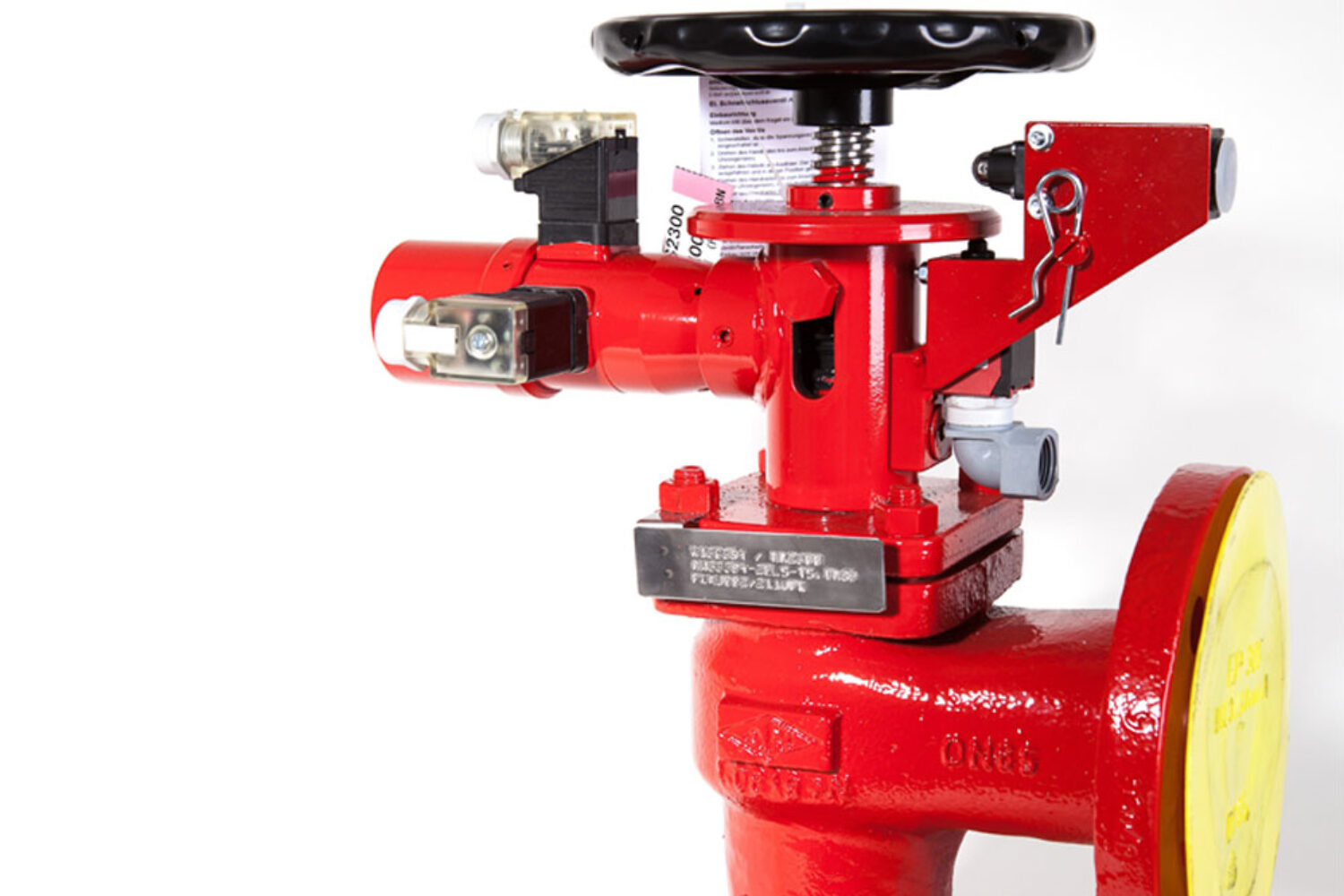
Electric quick-closing valves are an essential part of shipboard safety systems, ensuring the isolation of areas and equipment in emergency situations. While conventional remote-operated systems are based on hydraulic or pneumatic actuation, electrically actuated quick-closing valves offer additional possibilities for system monitoring, diagnostics and integration into modern vessel automation architectures.
A key advantage of electrically actuated systems is the continuous monitoring of both the valves and the associated control equipment. Integrated diagnostic functions and alarm handling enable potential faults to be detected at an early stage, reducing the risk of undetected failures. Additional external signalling can be implemented where required, improving operational transparency and supporting rapid response by the crew.
The electrical architecture also facilitates integration into integrated automation and monitoring systems (IAMS). Depending on project requirements, communication can be established via conventional hardwired interfaces or Modbus. Development is also underway to support modular type package (MTP) integration, providing a further step towards standardised engineering and improved interoperability between safety-related systems and higher-level automation platforms.
From a system design perspective, electrically actuated quick-closing valves offer considerable flexibility. A single blackout-safe control cabinet can supply and supervise multiple valves while maintaining the functional integrity of the emergency shut-off system. This allows complex valve arrangements with a high number of quick-closing valves, while multiple release stations can be incorporated without the extensive hydraulic or pneumatic infrastructure required by conventional solutions.
The absence of hydraulic piping or compressed-air distribution also reduces installation effort and space requirements. Electrical cabling is generally easier to route, resulting in faster installation, simplified commissioning and fewer interfaces requiring adjustment during system start-up.
As ship automation continues to evolve, electrically actuated quick-closing valves demonstrate how established safety functions can benefit from enhanced diagnostics, digital connectivity and simplified system architecture. Rather than replacing the fundamental function of emergency shut-off systems, the technology extends their capabilities by combining proven mechanical safety principles with the monitoring and communication requirements of increasingly digitalised ships.
Hall A1, Booth 216