

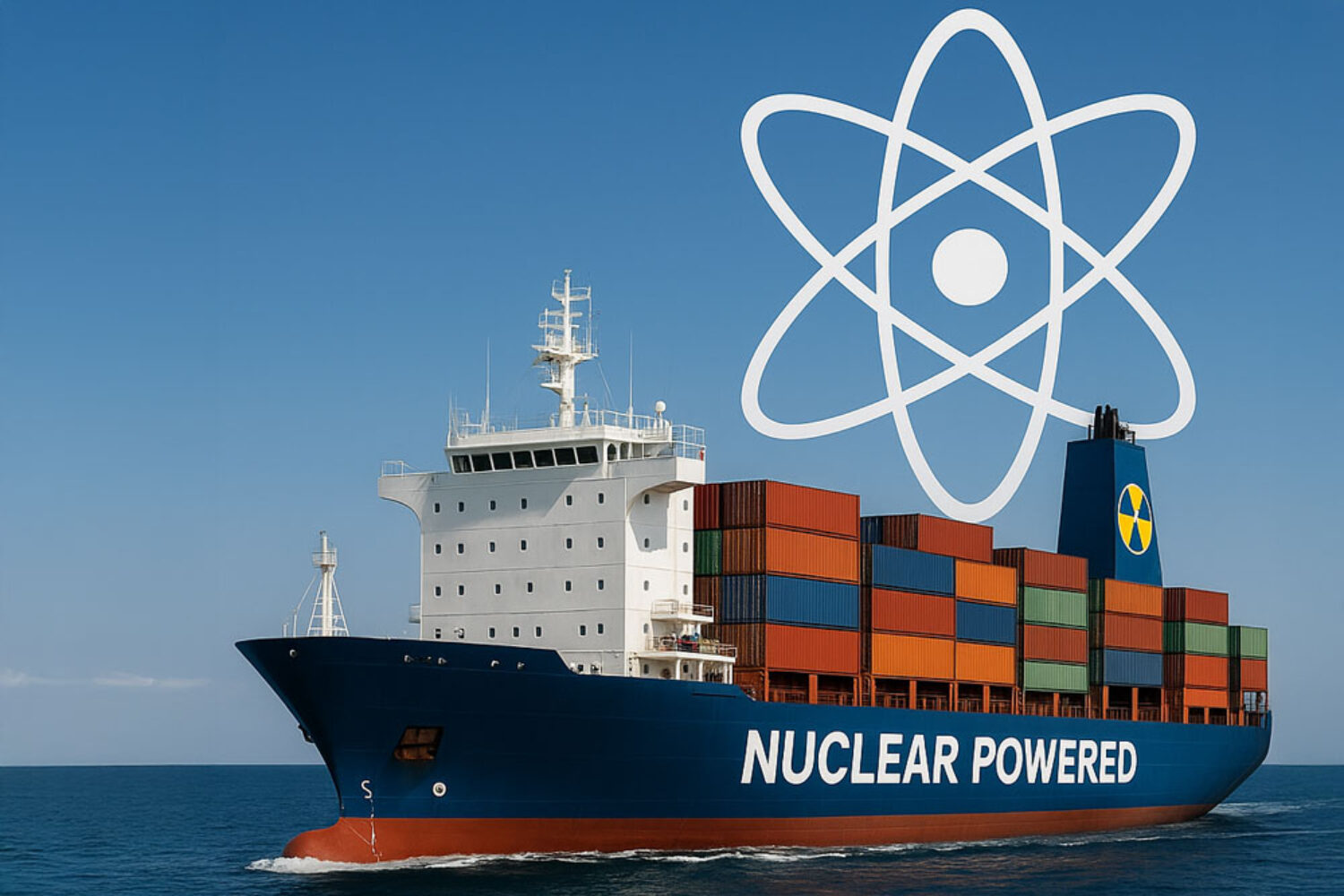
The UK wants to play a leading role in the decarbonization of shipping and has launched the Maritime Nuclear Consortium (MCC) to this end.
The alliance initiated by Lloyd’s Register (LR ) brings together companies and organizations from the fields of shipping, nuclear technology, insurance, law and regulation. The aim is to develop international standards for the safe, commercially viable use of nuclear-powered merchant ships, according to a statement.
In addition to LR, the core members of the consortium include Rolls-Royce, Babcock International Group, Global Nuclear Security Partners, the law firm Stephenson Harwood and the insurer NorthStandard. Together, the partners want to create the technical, regulatory and insurance-related foundations to make nuclear energy usable in civil maritime transport in the future.
Modular reactors as a key technology
The focus is on so-called Advanced Modular Reactors (AMR). These reactors should enable ships to sail for years without refueling and without causing CO₂ emissions. According to the consortium, this is a tried-and-tested technology that has been used in military fleets for decades and is now to be further developed for commercial use.
Due to its maritime tradition, regulatory experience and long-standing use of nuclear propulsion in the navy, the United Kingdom sees itself in a good starting position to play a key role in shaping international regulations. At the same time, the consortium warns that other countries are also working on corresponding standards and technologies and that the scope for taking a leading role is limited.
Focus on regulation, security and insurability
The first steps planned by the consortium include the development of a Statement of Design Acceptability (SODA) for a generic, site-licensed modular reactor. A classification and certification framework, safety and protection concepts and insurance models for nuclear-powered ships are also to be developed. In addition, the alliance intends to publish guidelines for industry and politics in order to accelerate the introduction of the technology.
According to LR, more than 700 marine nuclear reactors are already in use in military vessels worldwide. The challenge now is to adapt this technology to the requirements of civilian shipping. With the consortium, the UK wants to help establish nuclear propulsion as an option for CO₂-free commercial shipping and at the same time strengthen its own maritime industry.
“Decarbonization requires cleaner energy, higher standards and a responsibility to future generations. Nuclear energy is ready to meet this demand,” emphasizes LR CEO Nick Brown.