

Poland opts for Saab A26 instead of TKMS U212 in the “Orka” submarine program: the decisive factors were optimization for coastal operations, the schedule and industrial integration.
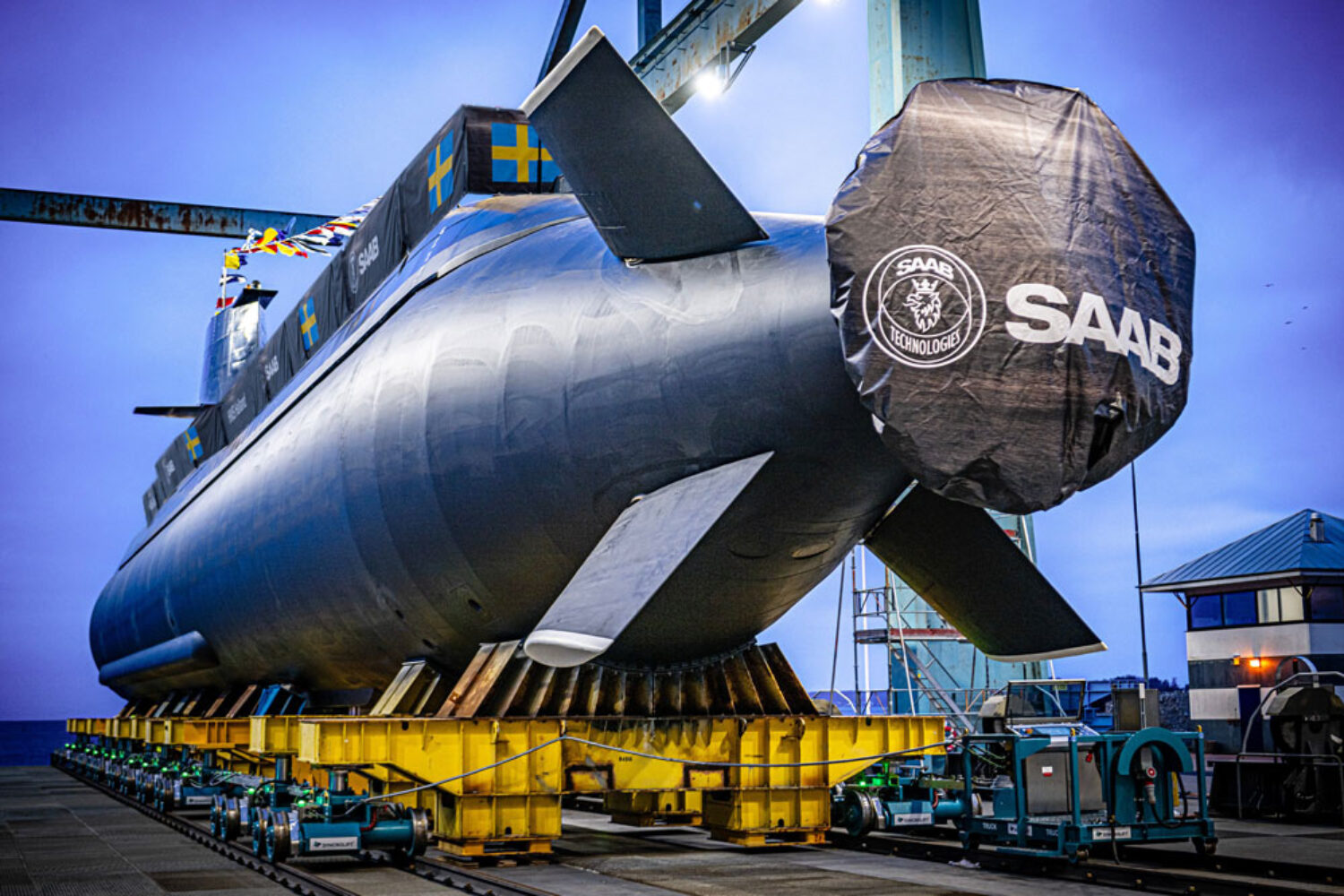
The Polish navy is to receive three new A26 “Blekinge” submarines from Swedish manufacturer Saab. The German offer from TKMS was not successful, although the 212 family is technologically one of the most powerful conventional submarine classes and has proven itself in the Baltic Sea. In the end, the overall package of operational accuracy, schedule and industrial integration tipped the scales in favor of the Swedish offer. A high level of political compatibility with Warsaw’s security policy orientation and resilient bilateral relations may also have played a role.
Tailor-made solution for the Baltic Sea
The Baltic Sea is a particularly challenging area of operation: shallow, narrow, acoustically demanding and heavily monitored by sensors. Here, a small silhouette, maximum quietness and high maneuverability count. The A26 class meets this profile with around 2,000 tons, Stirling AIP propulsion with long dive times, pronounced signature reduction and multi-mission portal for special forces and UUV operations. It enables reconnaissance, mine warfare, sub-hunting and covert operations – central to Poland’s maritime strategy along NATO’s eastern flank. Saab also offers the option of a modular section with vertical launch tubes for later cruise missile integration.
According to available information, TKMS offered a variant of the U212CD platform – a technically very powerful boat with a modern fuel cell AIP. However, the CD version is larger and was developed jointly by Germany and Norway for operational requirements in the North Slope region (North Atlantic, Barents Sea, Arctic). In terms of its design, range and sea behavior, the U212CD is more sea-focused than the A26, which Saab expressly designed for coastal mission profiles such as the Baltic Sea.
For Warsaw, the precise design of the A26 outweighed technological excellence.
Time factor speaks in favor of Saab
The Polish Navy is under pressure: the ORP Orzeł (Project 877E “Kilo”) is over 35 years old. It looks as if the armed forces leadership wanted to prevent a foreseeable loss of underwater capability and was therefore looking for a solution that would guarantee the continuous maintenance of this core capability. Saab offered specific deployment periods and an interim solution through training on Swedish boats – including the possibility of temporarily using a modern Gotland-class submarine.
TKMS, on the other hand, was unable to offer a short-term interim platform, probably due to the ongoing 212CD production. This was obviously a key criterion for Warsaw, which has been waiting years for implementation.
Strategic context: alliances and industrial policy
Another factor in the decision may have been the existing industrial cooperation between Saab and Poland. The company is the general contractor for the new Polish SIGINT ship “ORP Jerzy Różycki” (Dolphin class, project 107), a modern electronic reconnaissance ship being built in Gdansk at the Remontowa shipyard. Saab is supplying system integration and communications technology, Remontowa the hull. Polish shipyards are already manufacturing hulls for Saab projects. The hull of the Swedish SIGINT ship “HSwMS Artemis” was built at PGZ Stocznia Wojenna/Nauta in Gdynia before Saab carried out the final integration in Karlskrona. This underlines Poland’s growing role in European naval shipbuilding and made it easier for political decision-makers in Warsaw to view Saab as a long-term industrial partner. In addition, Saab acts as a comprehensive defense and security partner with orders for the Polish Army (Carl-Gustaf M4 multi-role grenade launcher), training systems and technology cooperation in the defense sector. Real industrial value-added shares are already being realized in Poland, not just planned.
A significant involvement of Polish shipyards is expected for the Orka A26 boats. Either in hull sections, integration or later MRO. This strengthens Poland’s industrial policy self-image as a rising maritime defense location.
According to research, TKMS has also offered industrial participation and technology transfer, possibly with the involvement of Polish shipyards in construction and MRO projects (MRO maintenance, repair, general overhaul). However, these elements were not binding enough until the decision was made and were presumably not specified in detail. In contrast to Saab, which has already been able to prove with ongoing projects that it implements industrial integration pragmatically.
Polish risk assessment
Technically, a German-Polish alliance would also have been possible. However, Warsaw chose the path of in-depth cooperation with Sweden, which already has extensive Baltic Sea submarine capabilities and thus enables a direct maritime cluster. Poland obviously assessed the programmatic risk not primarily at platform level, but organizationally: Saab could point to already established industrial partnerships and integration structures in Poland, while the German offer was more dependent on future coordination in the multinational 212CD programme. The immediately realizable training solution and a potential transition platform were also important factors.
In the end, it was not technological differences that were decisive, but a more coherent overall framework from the Polish point of view, consisting of operability for the Baltic Sea, schedule, industrial participation and clear organizational responsibilities.
TKMS remains the technical benchmark provider in Europe, but excellence alone was not enough in Poland. Warsaw was looking for capabilities now, industrial partnership broad and strategic embedding deep. Saab delivered. (HUM)