


Steel from recycled ships could make an important contribution to the decarbonization of European industry. However, ships are still hardly ever scrapped here.
The demand for steel in Europe continues to grow – infrastructure, various branches of industry and, not least, the defense industry are dependent on it. However, stricter climate regulations within the EU have also brought the decarbonization of steel production into focus. The industry is responsible for around 5% of total regional emissions in Europe, which corresponds to 190 million tons of CO2 generated by steel production. There are new technologies to produce steel “green” or at least to reduce the emissions from production. However, it is even better to cover the enormous demand with steel that has already been produced: scrap. And the maritime industry alone will soon be producing a lot of it.
As a joint study by the NGO Shipbreaking Platform, the think tank Sandbag and the University of Tuscia in Italy has investigated, ship recycling in Europe offers great potential to relieve the pressure on the local steel industry. According to the study, steel producers will try to reduce their energy consumption in the coming years. New technologies such as electric arc furnaces (EAF) should make it possible to process large quantities of recycled steel. According to the report, steel from ships could be a reliable source for this, as it has to meet high quality standards.
Almost 12,000 ships will be scrapped in the next few years
A look at the next few years illustrates just how great the potential of ship recycling is. The study expects that almost 12,000 European-owned ships will have reached the end of their lives by the mid-2030s. By this time, around 700 ships per year will be decommissioned. If these resources can be used, this would correspond to 10 to 15 million tons of steel that can be recovered from scrap every year. This would cover a fifth of the EU’s steel scrap consumption. Recycled steel would reduce emissions from production by up to 80%, while at the same time saving 40% water and energy.
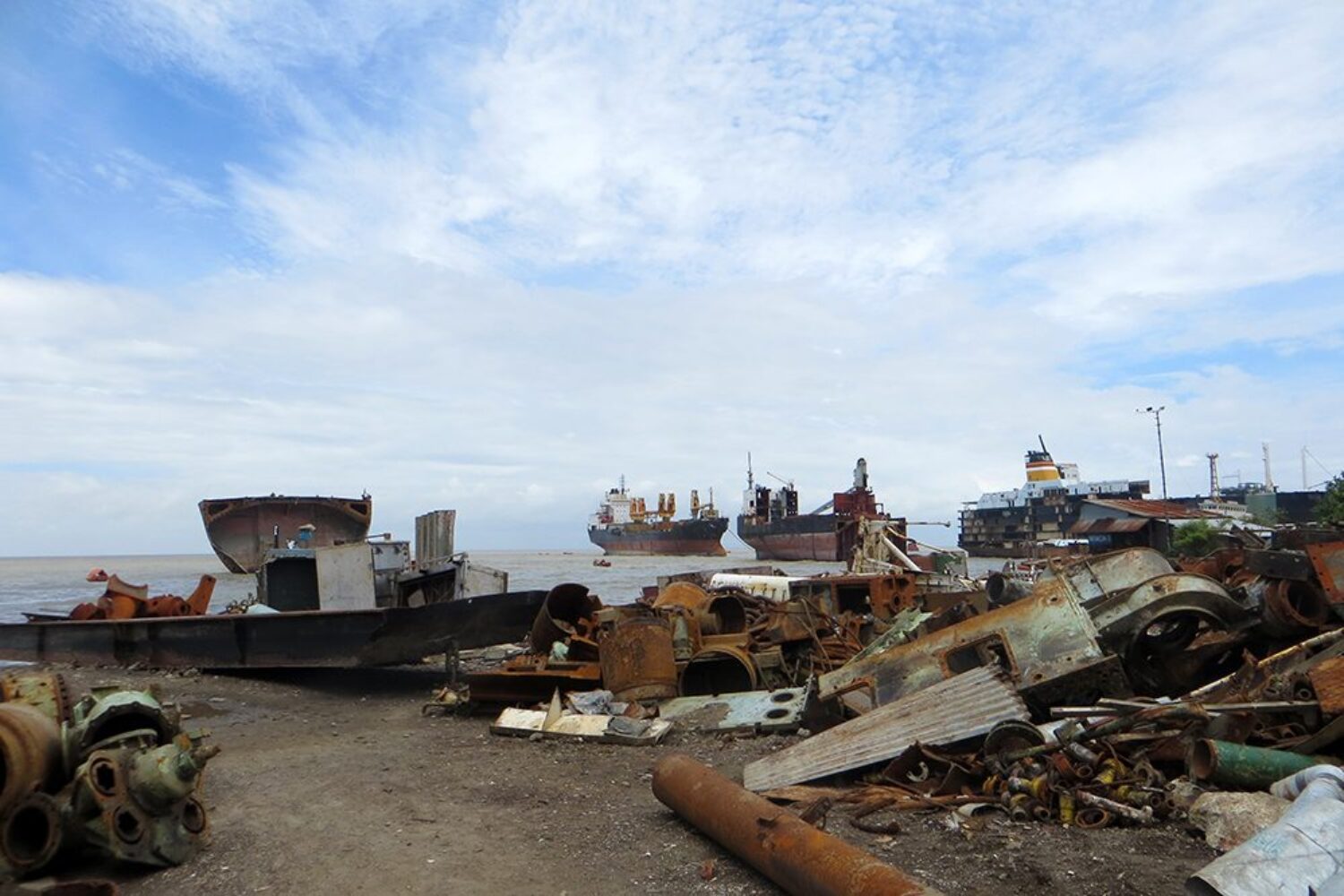
Despite this potential, however, not even 1% of all European ships are currently recycled in the EU, for example in Turkey or at EWD Benli in Germany. Most shipping companies have their ships scrapped in Southeast Asian shipyards, where the work is sometimes carried out under unsatisfactory conditions for people and the environment.
“Europe’s shipping sector has a huge reservoir of high-quality steel that is currently being processed abroad in unsafe conditions at the end of its life,” said Benedetta Mantoan, Policy Officer at the Shipbreaking Platform. “Our report shows that with the right measures, including transparent traceability, tighter controls and financial incentives, we can make shipbreaking scrap a cornerstone of a circular, low-carbon steel economy. This is not only a win for the environment, but also a strategic opportunity for European industry.”
According to the authors, the planned EU Circular Economy Bill offers a decisive opportunity to promote ship recycling in Europe. The creation of an EU market for secondary raw materials, in particular steel scrap, is therefore a priority. According to forecasts, Europe will be a net importer of steel scrap by 2050. Ship recycling would ensure a reliable supply chain for the secondary raw materials market.