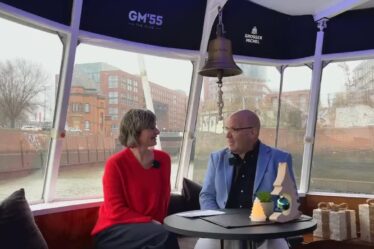



Small modular reactors, floating power barges, and new class rules: nuclear energy is no longer a hypothetical option for commercial shipping. In this episode of HANSA.newscast, I speak with Patrick Ryan, Chief Technology Officer at American Bureau of Shipping (ABS), about how nuclear propulsion has become a mainstream topic again.
The conversation examines why nuclear has returned to the industry agenda, driven by decarbonization pressure, limitations of alternative fuels, and significant advances in reactor technology. Ryan explains how small modular reactors (SMRs), originally developed for land-based applications, align closely with the power demands of large vessels and offshore energy solutions.
A central focus is the role of classification societies in shaping technologies that are not yet in commercial operation. Ryan outlines how ABS develops rules at the vessel–reactor interface, working alongside governmental nuclear regulators, shipyards, and designers through joint development projects. These efforts translate emerging concepts into concrete safety, firefighting, emergency power, and integration requirements for ships and floating power plants.
The episode also explores where nuclear makes sense first: floating power barges, offshore fuel production, port electrification, and eventually selected ship types such as large container vessels operating on dedicated routes. Key constraints, manufacturing scale, port readiness, regulatory timelines, and public acceptance, are discussed alongside realistic expectations, with first operational power barges projected around the mid-2030s.
Concluding on a broader perspective, Ryan reflects on generational shifts in attitudes toward nuclear energy and why emission-free, high-density power sources are increasingly seen as a long-term solution for global shipping. The discussion positions nuclear not as a distant future concept, but as an engineering pathway now being actively structured, regulated, and tested.