


In the event of severe storm warnings, large cruise ships are no longer allowed to sail off parts of the Norwegian coast. This measure is the coastal administration’s response to a near-disaster in 2019.
Norway is the first country to introduce a sailing ban for passenger ships over 150 m in length during storm warnings. As the Norwegian Coastal Administration Kystverket has now announced, the rules will come into force on January 1, 2026. These apply to particularly sensitive areas when the Norwegian Meteorological Institute warns of strong storms, i.e. storms with an average wind speed of 17.2 m/s (Beaufort 8) or more. The coastal areas affected are Stad, Hustadvika, Folda, Fugløykalven, Sørøya and Honningsvåg (marked red on the map)
This means that there may be more changes to the timetables of cruise companies operating in the affected areas, especially in the fall and winter months. However, passenger ships on the Norwegian mail ship route operated by Hurtigruten and Havila, for example, which are between 121 m and 136 m long, are exempt from this.
“Large passenger ships sailing in challenging waters put the ability to react in an emergency to the test. The new rules will help to reduce the risk and ensure that the voyages ar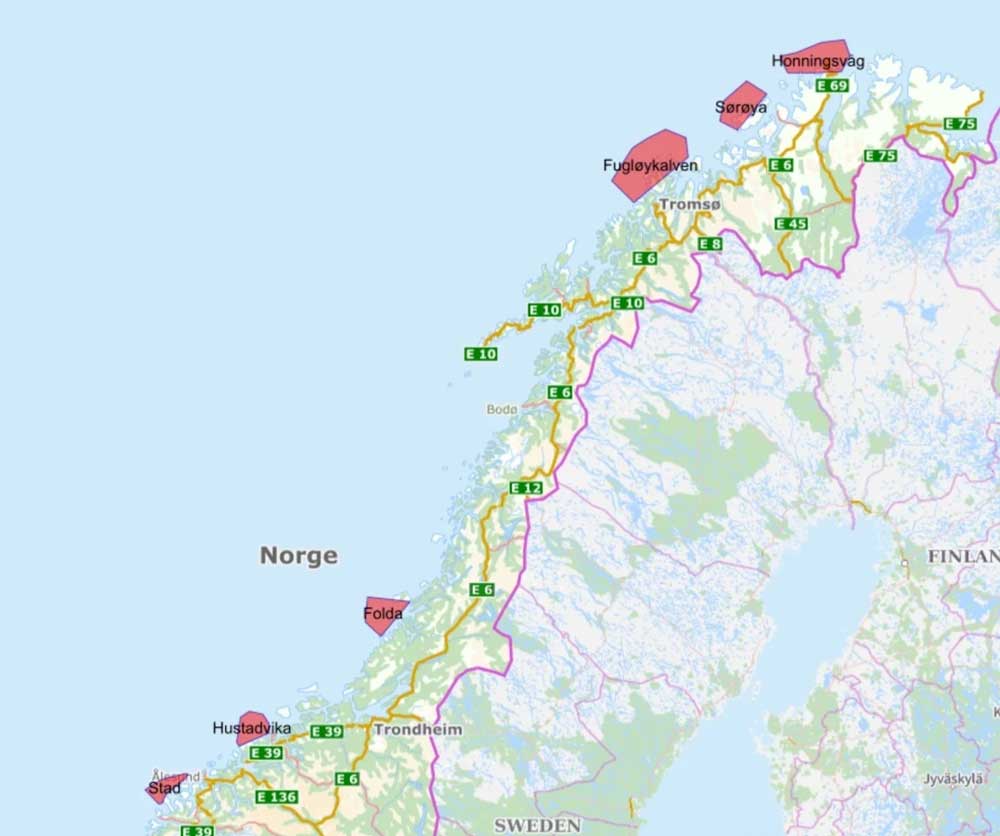 e carried out safely and responsibly,” emphasizes Arve Dimmen, Director of the Norwegian Coastal Administration.
The regulation that has now been published is one of many measures proposed following the near-accident involving the cruise ship “Viking Sky” in 2019. This regulation is intended to increase the safety of large passenger ships in areas where weather conditions can make necessary rescue and emergency measures more difficult.
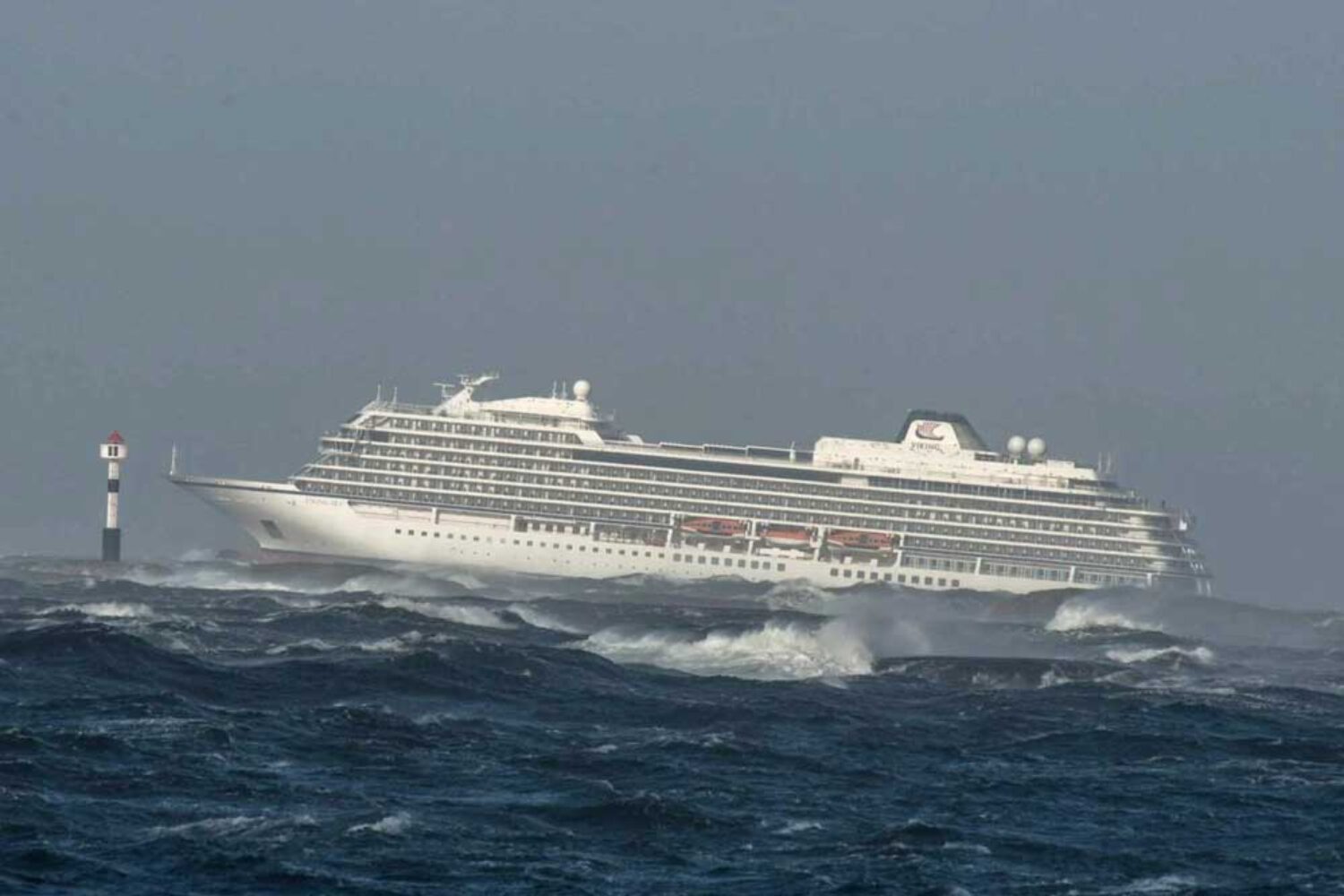
“Viking Sky” almost wrecked off the coast in 2019
In March 2019, the “Viking Sky” was sailing with 1,374 passengers off the coast of Norway in a severe storm when the ship became unmaneuverable without power and got into distress in a notorious section of the Norwegian Sea. According to the report by the Norwegian Safety Investigation Authority, the power failure prevented the ship from moving forward or being steered. According to the report, the cause of the accident was an insufficient level of lubricating oil in the oil sump tanks of all the diesel generators in operation. Combined with rough seas, this caused the ship to become unmaneuverable. The authority’s investigation “identified operational, technical and organizational safety deficiencies that contributed in various ways to the power failure” and called for more than a dozen safety recommendations, both structural and organizational.
The wind assessment is based on storm warnings issued by the Norwegian Meteorological Institute. These warnings apply to the entire Norwegian coast and are issued at expected wind speeds of gale-force gusts (13.9 m/s). The form of the warning complies with international standards. The warnings are broadcast via coastal radio, are available on the Yr platform under the heading “Danger warnings” and are also published as text warnings on Met.no. The Maritime Traffic Control Center in Vardø is responsible for monitoring compliance with the rules.
Passenger ships over 150 meters in length sailing in the designated areas must heed the Norwegian Meteorological Institute’s storm warnings. The warnings apply to certain stretches of coastline. In the event of severe storms for the section in question, it will be closed to shipping. This means that the ship must either sail outside the affected area or wait for better weather. However, it should be noted that a ship that has started its voyage in one of the restricted areas does not have to interrupt the voyage if an updated warning of strong storms is issued during the ship’s stay in the area.
The Norwegian Coastal Administration will evaluate the traffic ban after a certain period of implementation and make minor adjustments/changes if necessary. The authority is currently working on guidelines for the practical implementation of the ban.