

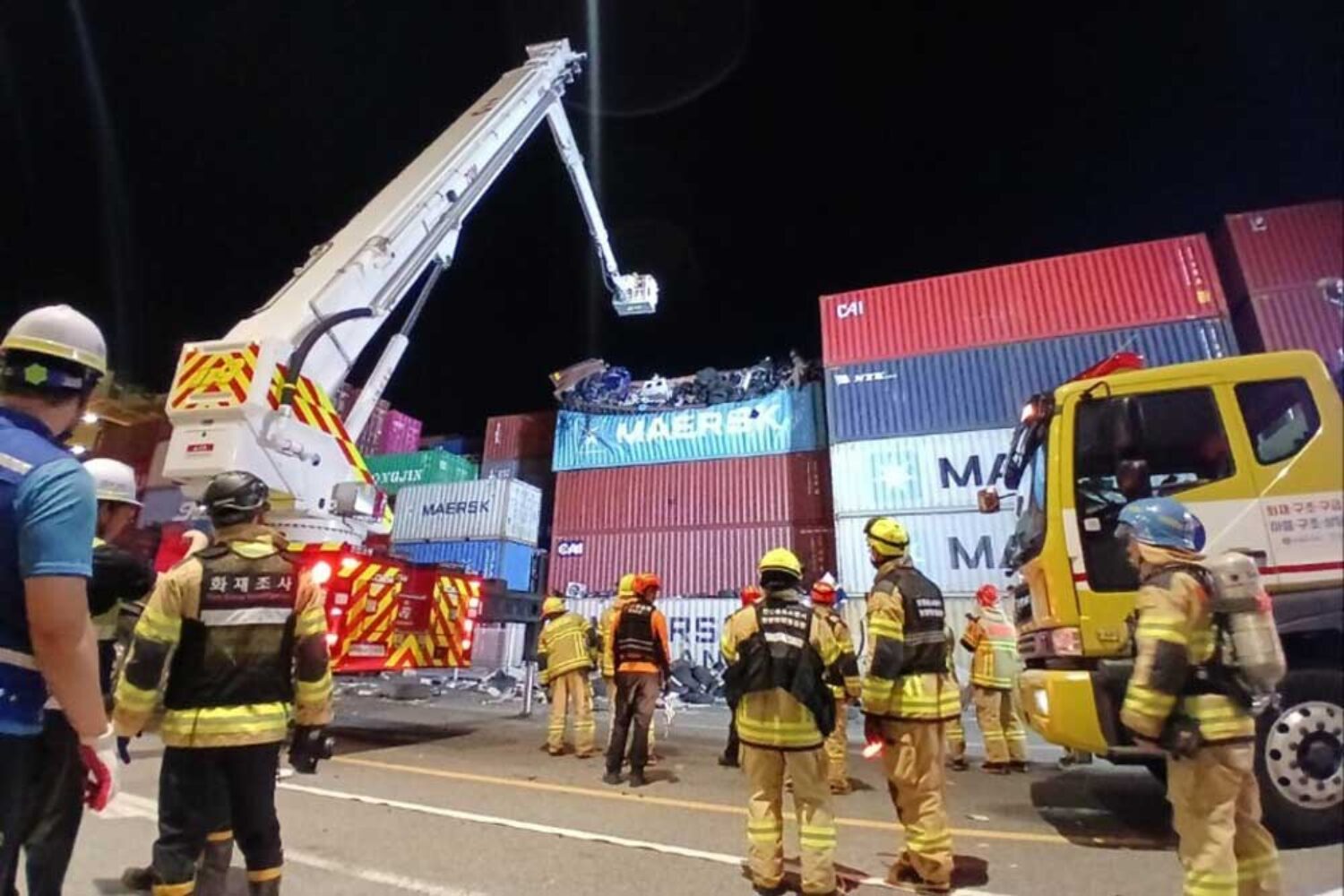
Undeclared LPG cylinders, butane cans and other combustible items were found to have caused a Maersk container to explode in Incheon port on 28 August, South Korean authorities have revealed.
The Maersk container was declared to be carrying used cars, but investigators found the hazardous goods among the contents. Korea Customs and port authorities were completely unaware of the hazardous goods in the container due to the lack of declarations.
The blast happened in Incheon Hanjin Container Terminal’s yard where containers were awaiting export. No one was hurt but, the blast damaged 13 nearby containers and the steel fence around the yard. The incident also affected operations in the terminal as mobile cranes were deployed to clear the debris. On 6 November, investigations showed that while the container was declared as carrying second-hand vehicles, three LPG kitchen cylinders, 12 butane-gas cans, one vehicle LPG cylinder, and an LPG-powered small utility vehicle were also placed in the container. Paperwork given to Incheon’s customs officials stated that the container was to move second-hand cars to China and Ghana.
Lawmaker Heo Jong-sik, a member of the ruling Democratic Party of Korea, said that the incident was a man-made disaster resulting from negligence and sloppy supervision. He said: “If the container exploded while it was on a ship, it’d have led to a major disaster. As Incheon is a hub for exporting used cars, the relevant organisations, such as the Ministry of Oceans and Fisheries, Korea Customs and Incheon Port Authority should examine the management of used car exports and control systems for hazardous goods to prevent such incidents.”
Incheon is South Korea’s main port for exporting used vehicles. When contacted by HANSA, Maersk’s spokesperson declined comment, saying that the Danish mainline operator was not involved in the probe. However, the spokesperson emphasised that misdeclared cargo still plagues the container shipping industry. In October, the Danish carrier issued an advisory, saying that customers will have to pay a fee for not declaring dangerous goods. (PL)