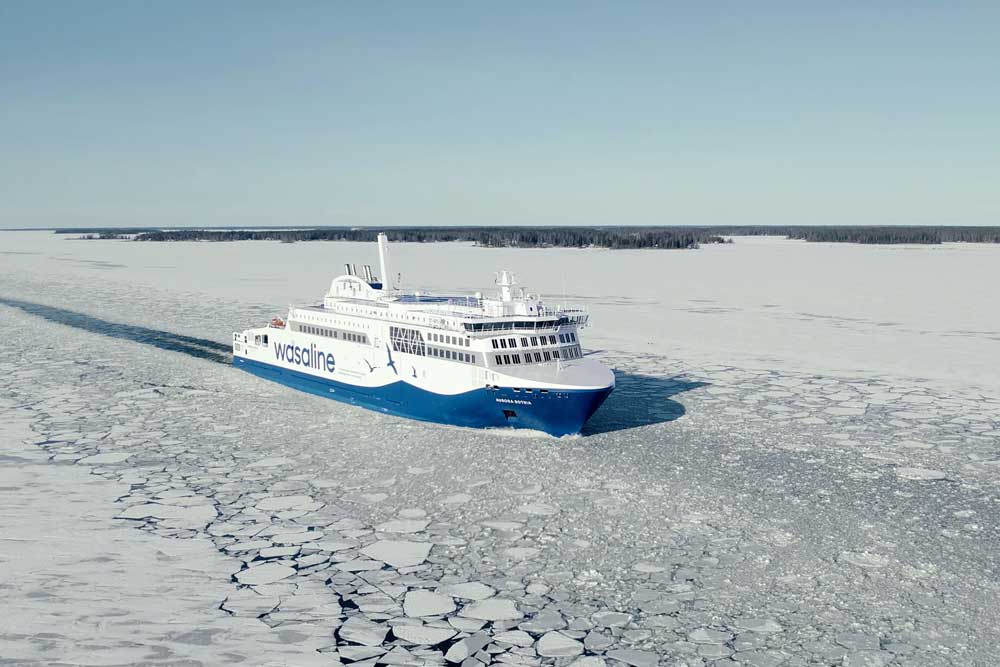


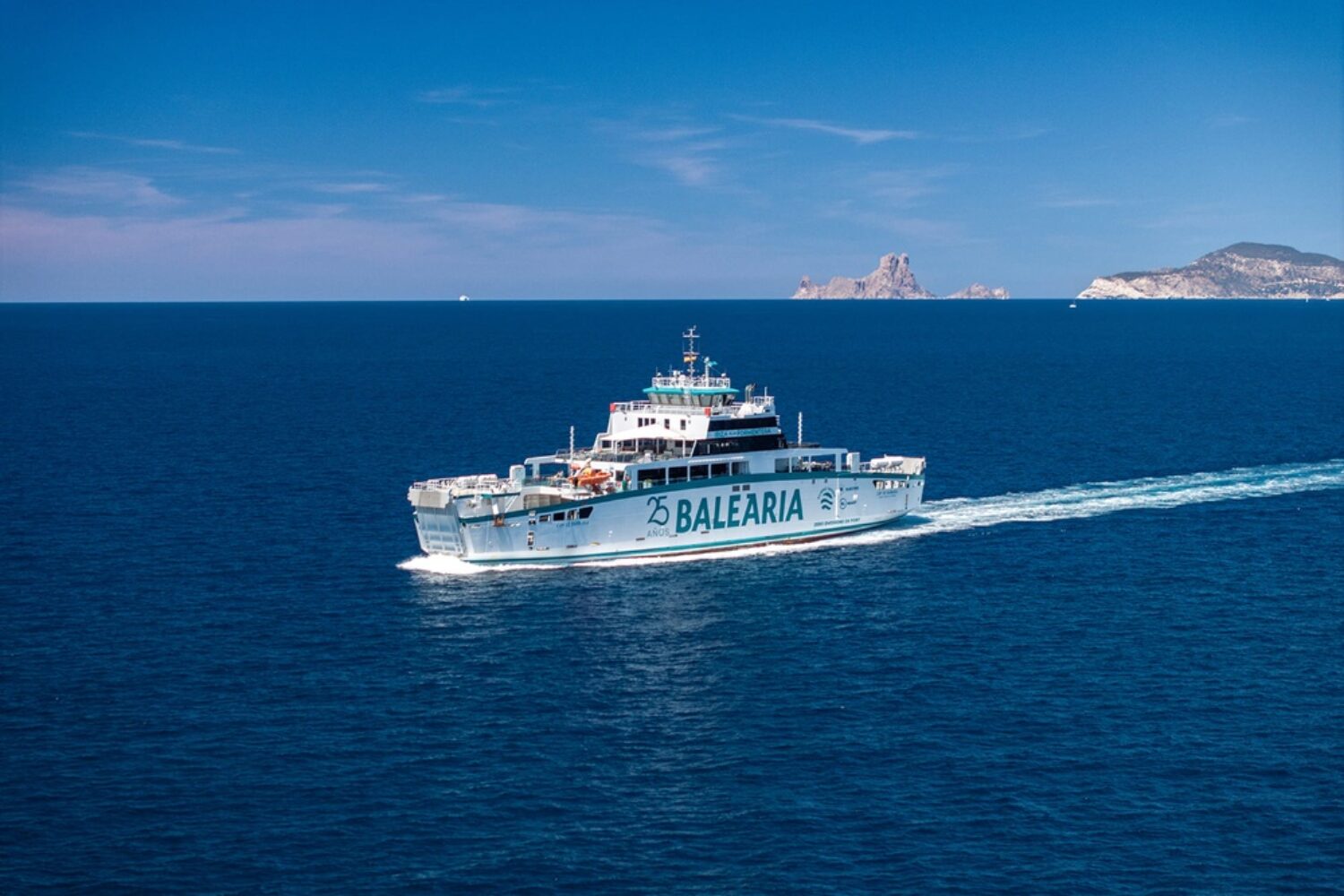
The Spanish ferry operator Baleària is equipping the electric ferry “Cap de Barbaria”, which operates between Ibiza and Formentera, with a newly developed, autonomous power generation module based on e-methanol.
The “eNomad” system built by Methanol Reformer is the first container of its kind in Europe and is to be installed on board in the coming weeks. The ferry will thus become a test vessel for the use of metanol-based hydrogen in short sea shipping.
The “Cap de Barbaria”, which has been in service on the route since 2023, was originally designed for the integration of a hydrogen system. The eNomad module produces hydrogen by reforming e-metanol and uses it to supply a fuel cell, which in turn provides electrical energy for on-board operation. This can support batteries and reduce the use of conventional generators.
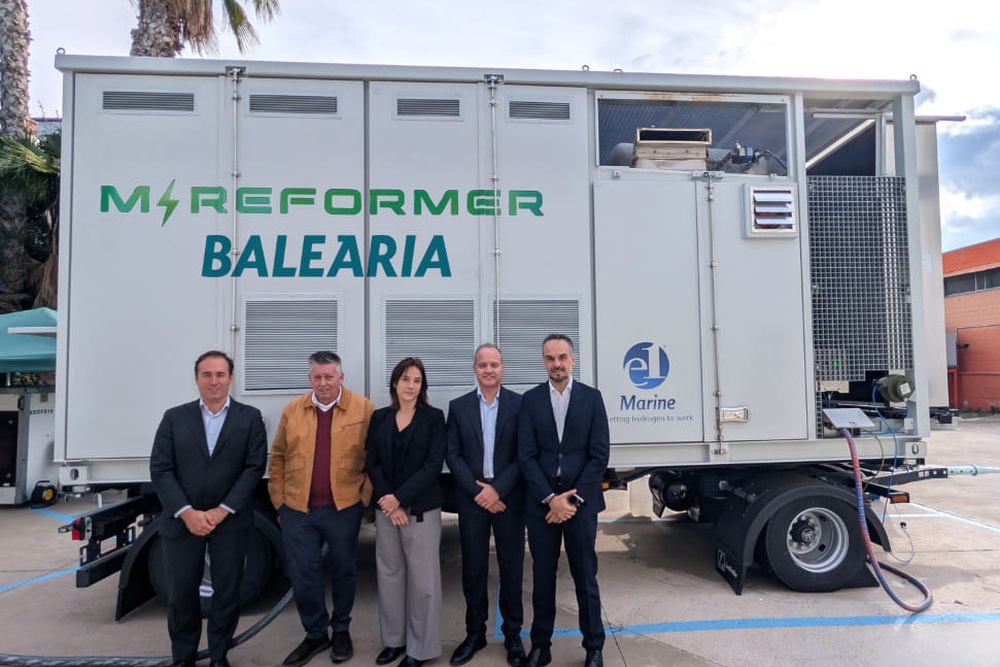
Baleària intends to test various configurations of fuel cells and battery systems as part of the pilot project. The aim is to evaluate the performance of methanol as an energy source – in particular the possibility of producing hydrogen flexibly and without complex port infrastructure directly on board. In addition, consumption values, emission reductions and transferability to other ships and routes are to be investigated.
“This compact system allows us to run a hydrogen laboratory in real ship operations on a sensitive and important route,” says Javier Cervera, Corporate Director Institutional Relations & Energy Transition at Baleària. They are testing technologies “that will enable the emission-free ship operation of tomorrow”.
Methanol Reformer also sees the project as an important step towards the maritime energy transition. “The collaboration shows how technological innovation can change maritime mobility,” says Managing Director Javier Torres.
The “Cap de Barbaria” was Spain’s first electric ferry for passengers and freight with zero emissions during port calls back in 2023. It reduced CO₂ emissions by 33% compared to its predecessor. With the current further development as part of the EU-funded “BUCEMTO” project, Baleària is continuing its course towards alternative energy sources – including gas, biofuels, electrification, hydrogen and now also metanol. The shipping company currently operates eleven ships with dual-fuel gas engines, three of which are powered by bioGNL, and is planning fully electric fast ferries for emission-free short journeys, for example on the planned green corridor between Tarifa and Tangier. In 2024, Baleària reduced its CO₂ intensity per passenger by around 10%.