

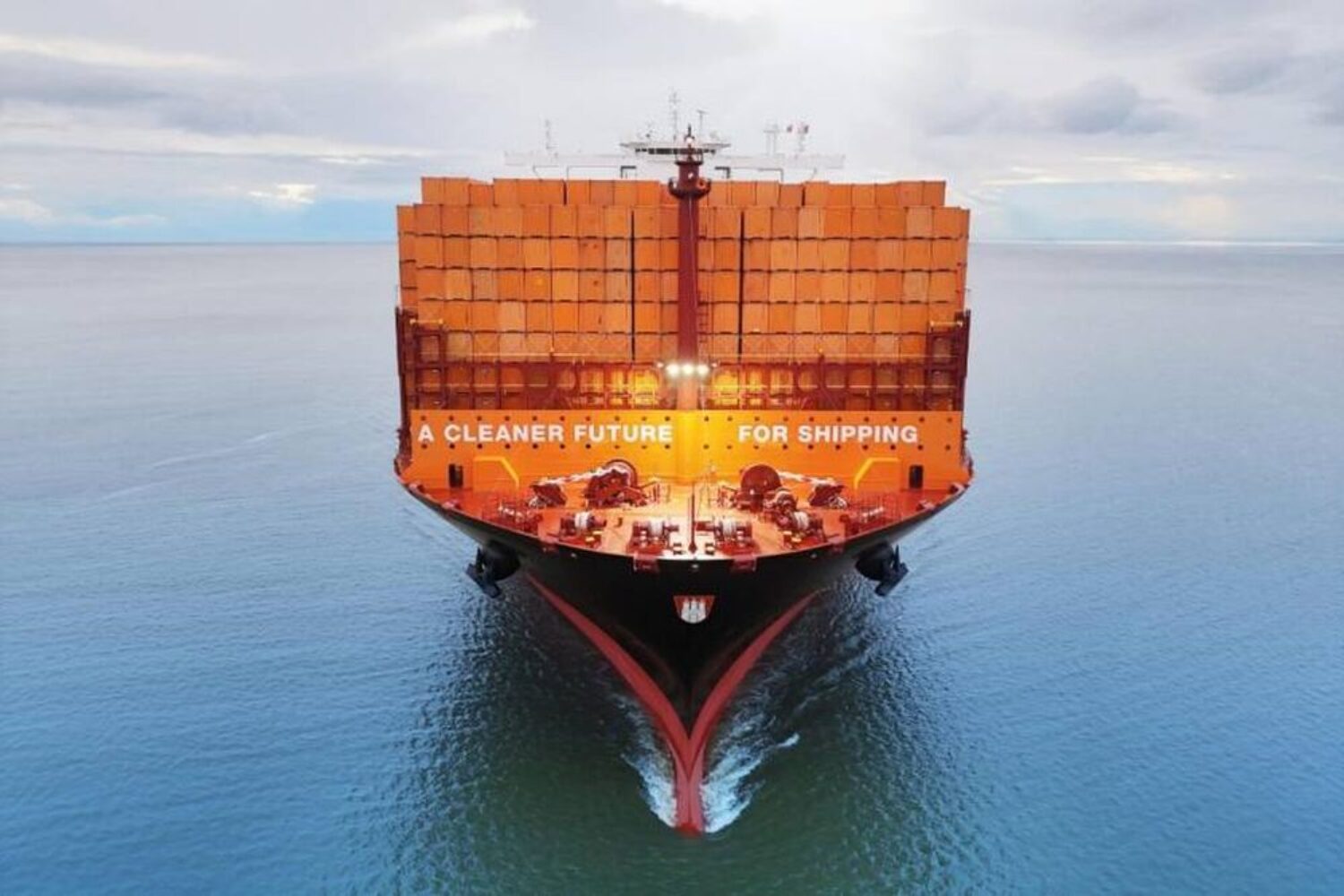
Hapag-Lloyd is pressing ahead with the modernization of its fleet and has ordered eight new container ships with dual-fuel methanol propulsion from the Chinese shipyard CIMC Raffles.
The units, each with a capacity of 4,500 TEU, are scheduled for delivery in 2028 and 2029. According to the company, the investment volume is more than 500 million US dollars.
The newbuilds will be equipped with dual-fuel engines that can run on both conventional fuel and methanol. According to Hapag-Lloyd, the ships are up to 30% more efficient than older tonnage of a comparable size. In methanol operation, up to 350,000 tons of CO2e can be saved per year. This is the shipping company’s first newbuild project with this propulsion technology.
The eight newbuildings complement the existing portfolio of alternative propulsion systems in the fleet. Hapag-Lloyd currently has a total of 37 dual-fuel container ships that are either already in service or under construction and can be powered by biomethane. In addition, the company reached an agreement with Seaspan Corporation in April 2024 to convert five container ships, each with a capacity of 10,100 TEU, to dual-fuel methanol propulsion systems in 2026 and 2027.
The technical conversion will be flanked by long-term fuel hedges. In November 2024, Hapag-Lloyd concluded an agreement with the Chinese energy producer Goldwind for the supply of 250,000 tons of green methanol per year. The fuel is to consist of a mix of bioethanol and e-methanol, reduce greenhouse gas emissions by at least 70% and meet current sustainability certifications.
Long-term charter of 14 ships
In addition to its own newbuilds, Hapag-Lloyd has also decided to charter in 14 further box carriers on a long-term basis. Four units with 1,800 TEU, six ships with 3,500 TEU and four more with 4,500 TEU are planned. Deliveries are scheduled for the years 2027 to 2029. As the company announced in November 2025, Hapag-Lloyd is investing in a total of 22 new ships in the sub-5,000 TEU segment.
“The continuous modernization of our fleet is firmly anchored in our Strategy 2030. The new ships will help to replace older tonnage, further decarbonize the Hapag-Lloyd fleet and reduce dependence on the charter market. In addition, these ultra-modern ships can be operated much more cost-efficiently,” said Rolf Habben Jansen, CEO of Hapag-Lloyd.
Hapag-Lloyd is sticking to its long-term climate targets. By 2030, absolute greenhouse gas emissions from fleet operations are to be reduced by around a third compared to 2022. Net-zero operation of the fleet is planned for 2045.