

The Tasmanian shipbuilder Incat has confirmed that the Danish shipping company Molslinjen is increasing its order book for new electric catamarans.
Following the order for two RoPax ships in the summer, a third high-speed newbuild has now been ordered. The shipbuilder refers to this as the “world’s largest electrification project at sea”.
The new 129-metre-long vessel will complement the two electric ferries already under construction at the Incat shipyard in Hobart. The fleet will operate on the Kattegat routes between Aarhus and Odden and Ebeltoft and Odden. Shipyard CEO Stephen Casey said, “This is an important milestone for both organizations,” Casey said. “We are proud to deliver vessels that will play a central role in Denmark’s clean transportation future.” Molslinjen CEO Kristian Durhuus said: “By building all three ferries at the same shipyard, we gain clear benefits and valuable experience from the first to the last vessel. It is also important for us to have a stable and reliable partner at our side in Incat.”
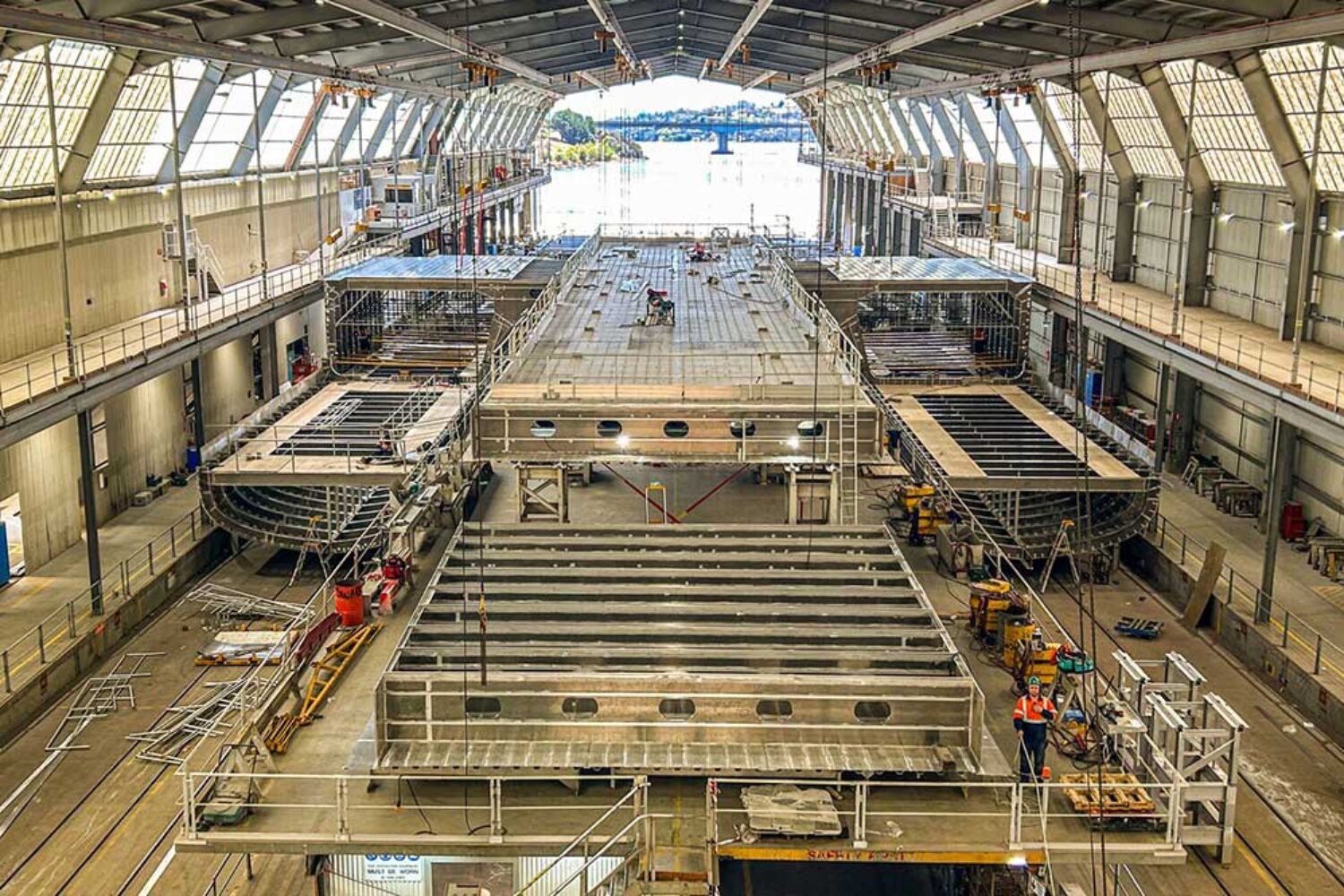
Construction of the three electric ferries in Hobart is already progressing; delivery of the series is planned for “the coming years”. The owner of the Molslinjen ferry line, Nordic Ferry Infrastructure, had initially ordered two battery-electric high-speed catamarans for several billion kroner.
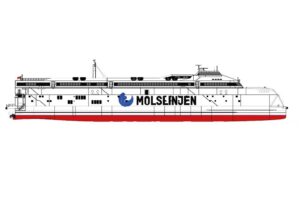
Each of the three ferries will be 129 m long and 30.5 m wide and will have space for up to 1,483 passengers and 500 cars. This makes it 11% larger than Bornholmslinjen’s “Express 5”, which will enter service in 2023 and is currently the largest catamaran in the world in terms of vehicle capacity. The addition of these new vessels will increase the total capacity for cars and passengers in the Kattegat by more than 25%. With their battery packs of 45,000 kWh, they can reach a service speed of over 40 knots. The catamarans are charged in around 30 minutes with 55,000 kW. The ferries can later be charged in both the ports of Aarhus and Odden.
“This is a huge undertaking that includes not only the three ferries, but also extensive infrastructure projects on land and energy storage systems for the new vessels,” said Kristian Durhuus, CEO of Molslinjen, at the initial contract award. The total investment for the three ferries and the associated onshore infrastructure is expected to be around DKK 3.5 billion (approx. €470 million).