


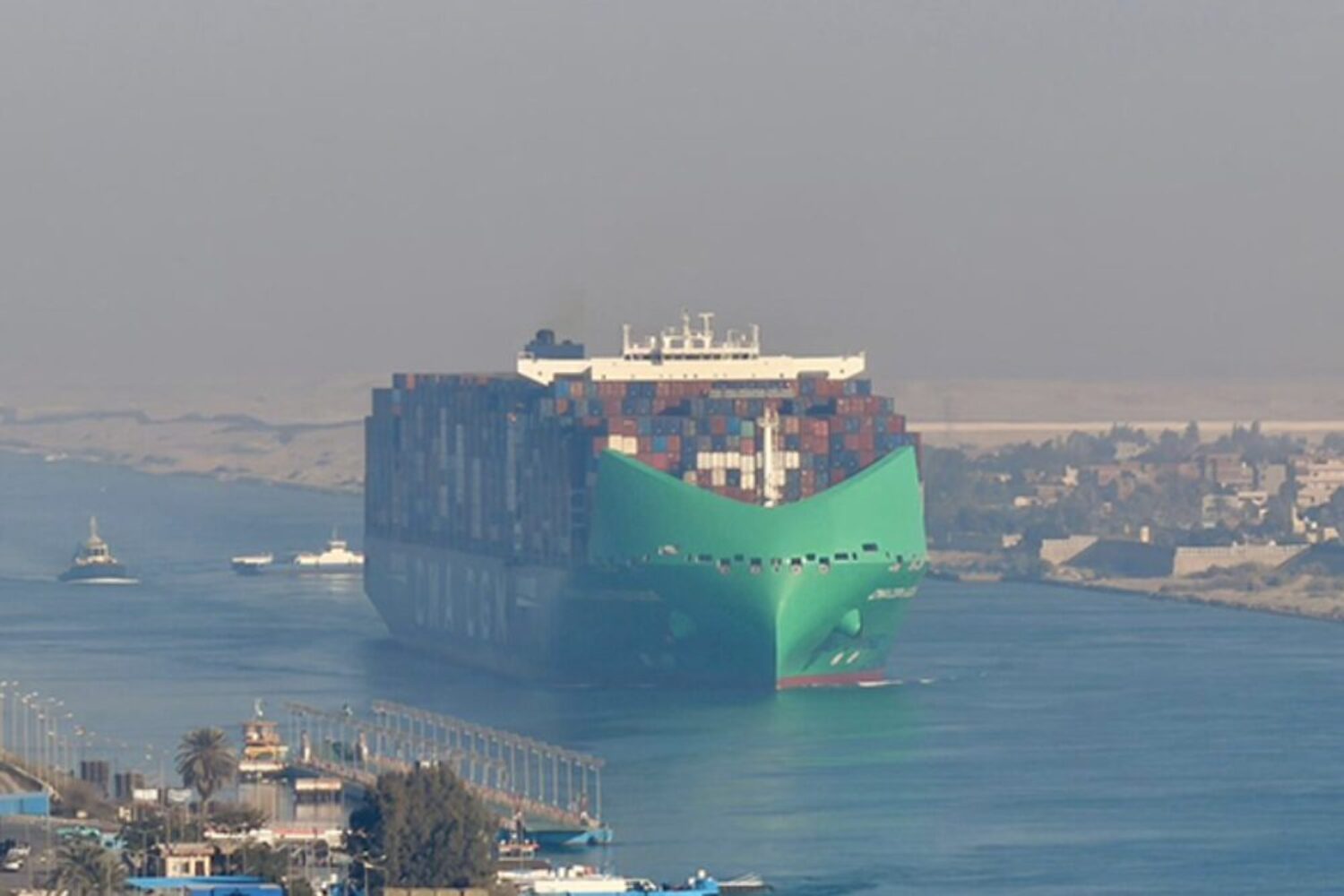
Despite the first passages through the Red Sea and the Suez Canal, the French shipping company CMA CGM is sticking to the route around the Cape of Good Hope for the time being.
According to the company, the FAL1, FAL3 and MEX services, which operate between Asia and Europe, will continue to be rerouted via South Africa. Ships on these services last sailed through the Red Sea, and there was talk of a complete return to the Suez route. Competitor Maersk recently announced its intention to use the shorter route again as a regular liner service after an absence of two years.
CMA CGM remains cautious. The shipping company justified its decision by stating that it is currently operating in a “complex and uncertain international environment”. Although the Houthi rebels in Yemen have not attacked any ships in the Red Sea for over three months, the all-clear for the waters has not been given.
“Shippers want predictability in their supply chains,” said Destine Ozuygur, Senior Market Analyst at the information platform Xeneta. “If shipping lines make the decision to return to the Red Sea and then reverse it – even if for important safety reasons – they still risk undermining confidence in the punctuality of schedules and weakening trust in partnerships.”
Recent data from Xeneta shows that transit times on the FAL1 route – which connects China and Singapore with six European ports, including two dedicated calls at Southampton – have fallen from 105 to 98 days since ships resumed transiting the Suez Canal. At the same time, one ship slot was canceled.
“Unpredictability is poison”
“Unpredictability is poison for supply chains,” said Ozuygur. “Shippers want certainty about the arrival times of their containers in port, even if this means longer transit times around the Cape of Good Hope.”
Xeneta believes that CMA CGM’s decision to continue to choose the safe route could “ironically” lead to shippers perceiving the shipping company as the riskier option. For example, it is possible that a shipper has paid a higher freight rate due to the shorter transit times through the Suez Canal, but then the arrival of the goods is delayed by a week. Furthermore, Xeneta finds it strange that CMA CGM of all companies – initially the most active shipping company in terms of the resumption of traffic in the Red Sea – has now announced this step backwards, while Maersk is allowing services to sail via the Suez Canal again. This illustrates the unpredictability that shippers now have to deal with.
Ozuygur warned that this unpredictability could spread to all services and shipping companies. This also applies to CMA CGM’s INDAMEX service, which is currently still scheduled to pass through the Suez Canal on both the outward and return journeys. According to the data available, the transit time from Port Qasim to New York fell from 40 to 36 days once the Suez route was resumed.
“There has been no official announcement from CMA CGM on the INDAMEX service, but shippers will be watching the decision on the FAL and MEX services closely and are concerned that containers will arrive later than planned,” Ozuygur said. “Are shippers planning for a transit time of 40 or 36 days? What impact will this have on storage costs or demurrage charges? If you extend this uncertainty to all services and shipping companies, the risk of widespread disruption becomes clear.”