


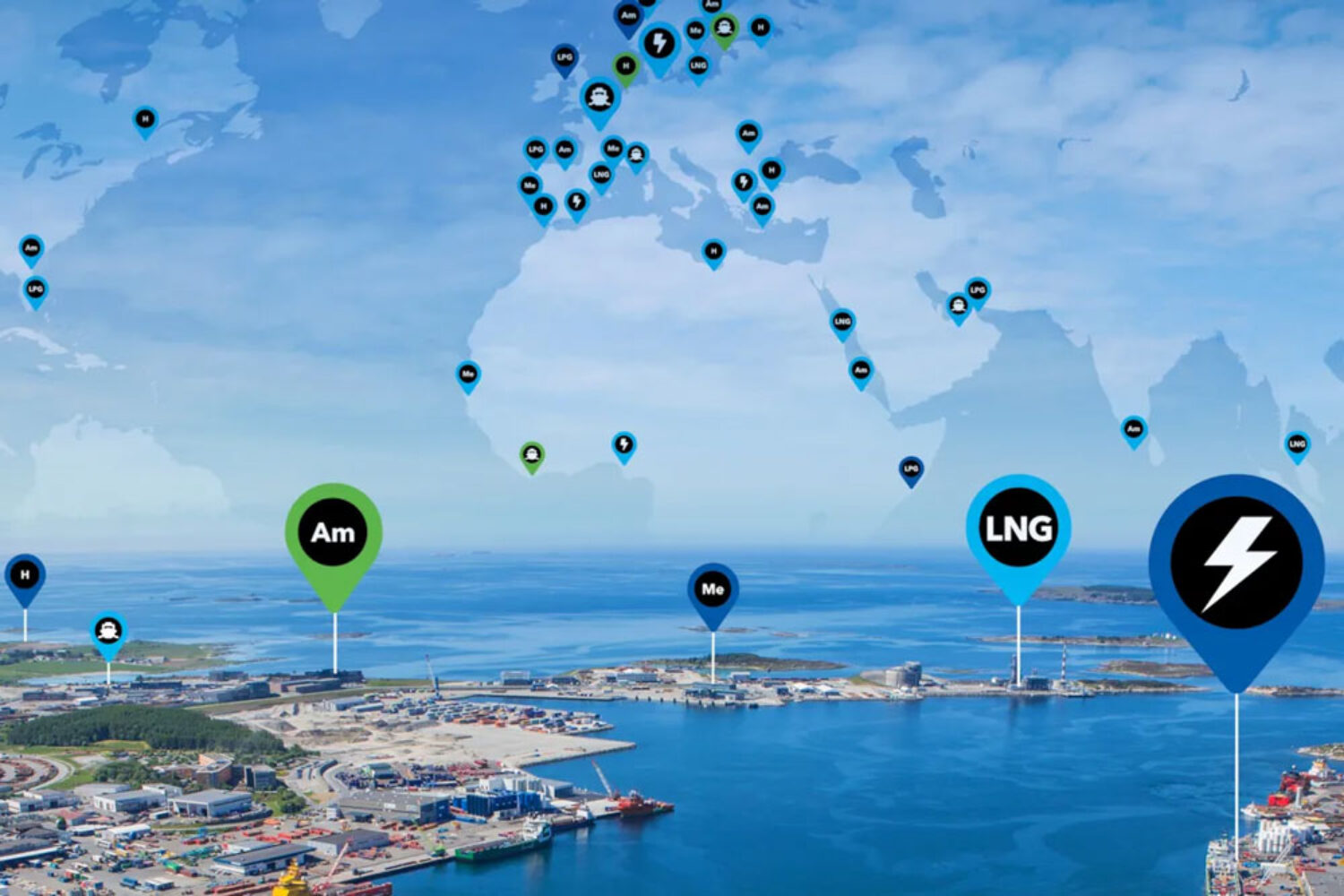
The classification society DNV provides an overview of the development and use of alternative fuels and technologies on its Alternative Fuels Insight (AFI) platform. The class draws a mixed balance for the past year.
The latest annual data from the AFI platform shows that the past year was characterized by regulatory uncertainty and a market correction. While overall newbuilding activity slowed in 2025 after the unprecedented boom of the previous year, the share of tonnage ordered with alternative fuels, measured in terms of gross tonnage (GT), remained stable at 38%. This stability was primarily based on the continued strength in the container ship segment and was also supported to a lesser extent by orders for passenger ships and car carriers (PCTC).
Decline of 47%
A total of 275 newbuilding orders for ships powered by alternative fuels were placed worldwide in 2025. This corresponds to a decline of 47% compared to the previous year and reflects the general downturn in the new construction business. While around 4,405 orders were placed in 2024, only 2,403 were placed in 2025.
Despite this slump, container shipbuilding proved robust according to DNV: The number of orders rose from 447 to 547 units, which accounted for around 49% of the total gross tonnage and 68% of all newbuild orders for alternative fuel ships. Alternative fuels clearly dominated within the container ship segment. In terms of tonnage, the fuel mix was around 58% LNG, 36% conventional fuels and 6% methanol.
According to Knut Ørbeck-Nilssen, CEO Maritime at DNV, the decline in 2025 also shows a natural slowdown after several years of exceptionally high order activity. However, the momentum towards alternative fuels has continued in selected segments. Further development depends on effective and global regulations that promote the use of alternative fuels, create a level playing field and enable fair implementation.
LNG has the edge
In line with their strength in the container segment, LNG-powered ships led the market for alternative propulsion systems across all ship types in 2025. They accounted for 188 orders, or 31% of the total gross tonnage. The number of methanol orders fell from 149 in 2024 to 61, while demand for ammonia and LPG was limited.
Orders for LPG and ethane tankers fell by 73% from 2024 to 2025. Bulk carriers, crude oil tankers and product and chemical tankers also recorded significant year-on-year declines, reflecting shipowners’ continued focus on cost efficiency and the limited incentives for investment in alternative fuels to date. Orders for car carriers fell particularly sharply after several strong years and were 90% below the previous year’s level.
According to Jason Stefanatos, Global Director Decarbonization at DNV, the units with alternative drive systems ordered in 2025 will primarily be driven by cargo owners who have set their own emissions targets despite the market slowdown and regulatory uncertainty. They are investing where fuel infrastructure, regulatory certainty and economic viability come together – particularly in container shipping, where LNG and methanol are supported by established supply chains and customer demand.
Bulkers and tankers rely on conventional fuels
In contrast, segments such as bulk and tanker are more sensitive to market cycles and capital costs and continue to favor conventional fuels until there is more clarity on fuel lifecycle emissions and regulatory incentives. In practical terms, this environment should encourage owners to focus on scalable solutions, invest in fuel flexibility and implement targeted efficiency measures that can be adapted to changing policy and market conditions.
Investment in infrastructure
Investment in fuel infrastructure continued in 2025. 22 new LNG bunker vessels were ordered, as well as additional bunker units for methanol and biofuels. According to DNV, these developments signal growing confidence in LNG supply chains and emerging multi-fuel capabilities, reducing operational risks and supporting the economic viability of alternative fuels.
Wind Assisted Propulsion Systems (WAPS) recorded the delivery of 24 vessels with a total of 63 sails installed in 2025. This was slightly higher than in 2024, when 22 ships with a total of 49 sails were delivered.