

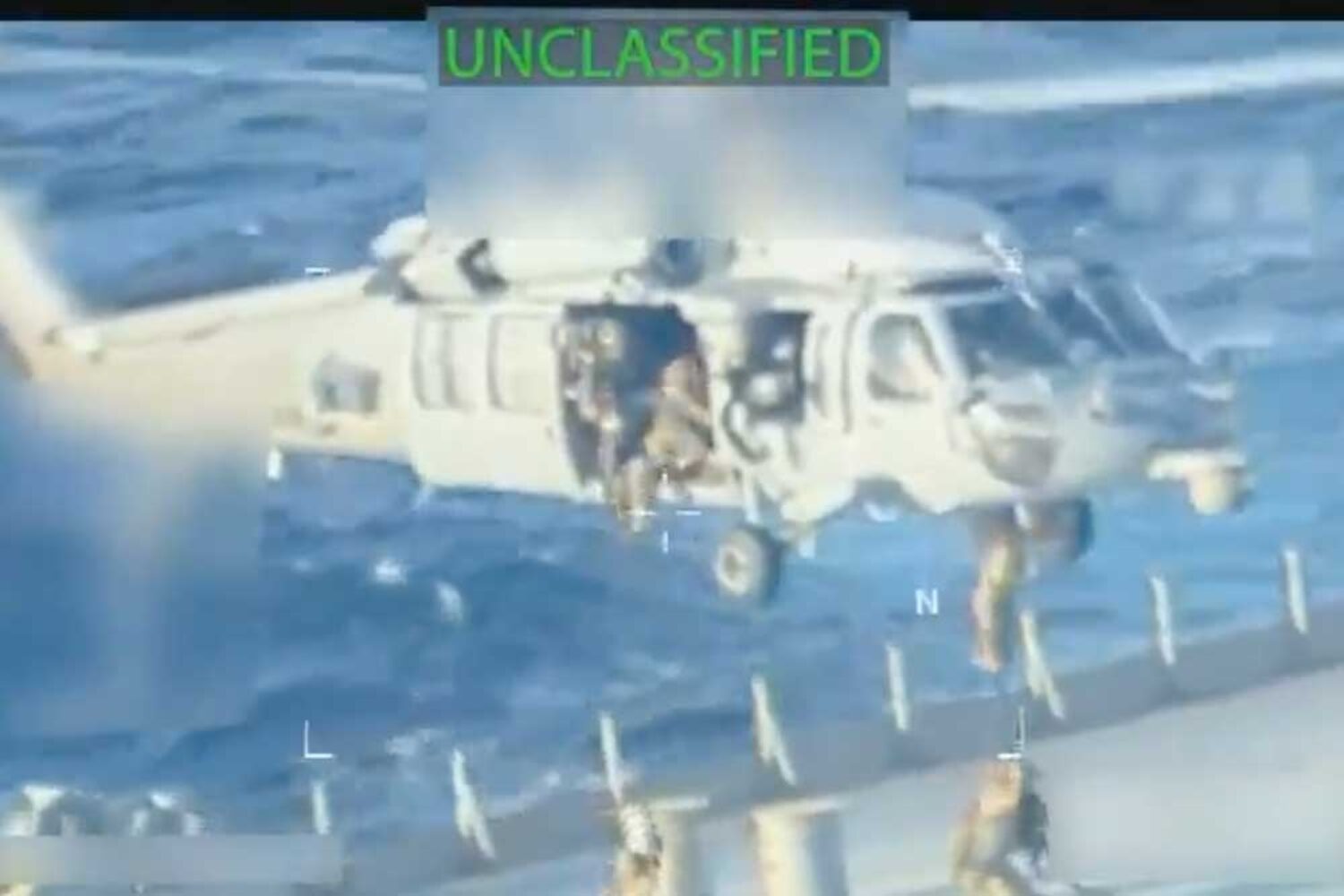
The seizure of the “Skipper” is directly followed by further measures by the USA against the shadow fleet operating between Venezuela and Iran.
The VLCC tanker “Skipper” has been seized by US forces off Venezuela. Shortly afterwards, the United States sanctioned further ships – so could the next operations soon follow?
According to the latest AIS data, the tanker “Skipper”, which was seized by the US last Wednesday, was heading to US ports. A federal court had authorized the move due to suspected violations of sanctions against the Iranian energy industry. The tanker has transported crude oil between the exporter Venezuela and Iran several times in the past, often with a false AIS.
“The ‘Skipper’ and similar tankers are financing the brutal regimes in Iran and Venezuela by transporting illegal oil that falls under US sanctions,” reads a statement from the organization United Against Nuclear Iran (UANI). Chairman Jeb Bush, former Governor of Florida, and UANI CEO Mark Wallance said they had long called for such action by the US. “Interceptions are essential if the world is to bring the Islamic Republic and its oil wealth used to finance terrorism to its knees.”
Oil worth $90 million
According to data from Tankertrackers, the “Skipper” is currently said to be loaded with 1.85 million barrels of crude oil from Venezuela; the last media report was about 1 million barrels. The value of the cargo is estimated at around $90 million. In addition to the “Skipper”, there are currently 80 other tankers off the coast of Venezuela. 30 of them are said to be on US sanctions lists. Criticism of the action was immediately voiced from the capital Caracas: The seizure of the tanker is an act of “international piracy”, they say.
The Office of Foreign Assets Control (OFAC) has since sanctioned six other ships with links to Venezuela. These are the tankers “White Crane”, “H Constance”, “Kiara M”, “Lattafa”, “Monique” and “Tamia”. The ships belong to similar size classes (298,000 – 319,000 dwt) and were built between 2002 and 2007.
It has not yet been officially communicated what goals the US government wants to achieve with the intensified action against Venezuela. However, experts believe the focus is on economic reasons. According to calculations, Venezuela has the largest oil reserves in the world, but currently produces “only” around 1 million barrels a day. The country is in economic decline and has been ruled by President Nicolás Maduro since 2013.
A regime change could lead to US companies gaining access to the reserves. In addition, President Donald Trump does not seem to shy away from further operations: weeks ago, he spoke of wanting to act “on land” as well. However, according to the White House, there are no plans to go to war. (JW)